Home Battery Backup Without Solar (2026 Guide): Grid-Charged, TOU & Dual-Fuel Strategies
Guide to home battery backup without solar panels (2026): grid-charged storm prep, TOU utility arbitrage, sub-10ms UPS, idle loss control, and hybrid recharge.
You do not need solar panels to run a reliable home battery backup. Grid-charged LiFePO4 stations replenish at 1,500W–4,000W from wall outlets, deliver 0 ms to <10 ms UPS backup for home offices, and support Time-of-Use utility arbitrage—making them ideal for apartments, shaded lots, and HOAs. Budget 78%–88% usable AC efficiency over 24–72 hours and pair with a vehicle alternator or outdoor dual-fuel generator for multi-day outages.

Most residential backup guides assume you own a sunlit, unshaded, south-facing roof with homeowner-association permission to bolt down photovoltaic arrays. In practice, tens of millions of US apartment renters, high-rise condo residents, urban townhome owners, and heavily forested homeowners cannot install solar panels at all—and even homeowners with roof exposure frequently face winter ice storms where solar drops close to zero.
Operating a grid-charged home battery backup without solar removes rooftop barriers completely. Modern LiFePO4 (LFP) stations pull 1,500W–4,000W straight from utility wall outlets, switch over fast enough to protect remote-work offices, shave expensive utility peak tariffs via Time-of-Use (TOU) automation, and pair cleanly with vehicle alternators or outdoor propane generators whenever outages drag past 48 hours.
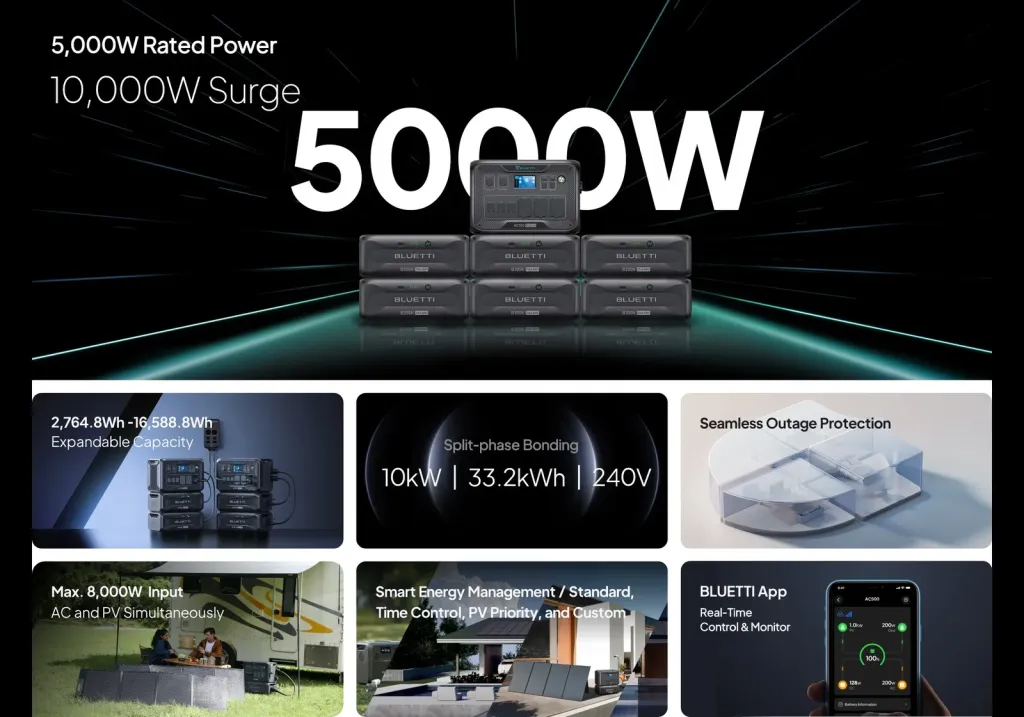
Grid-Charged Blackout Architecture: Why AC Recharge Speed Matters
When solar panels aren’t part of your strategy, AC wall charging wattage (W) replaces MPPT solar input as your primary recovery spec. Severe thunderstorms and winter wind events frequently trigger intermittent grid recovery—dropping power for six hours, restoring utility lines briefly for 90 minutes, and tripping off again. A legacy 300W–400W wall charger barely dents a 2,048Wh battery before the second outage hits, whereas a 1,500W–2,400W internal AC charger restores full readiness inside one brief utility flicker.
| Model & Non-Solar Role | LFP Capacity & Usable AC (78%–88%) |
Max AC Wall Recharge Rate | Empty-to-Full Wall Time | UPS / EPS Transfer Speed |
|---|---|---|---|---|
| EcoFlow DELTA 3 Plus (Home Office & Condo) | 1,024Wh (~800–900Wh AC) |
1,500W (120V X-Stream) |
~56 mins |
<10 ms (w/ HID USB shutdown) |
| BLUETTI AC200L (Fridge & 120V Essentials) | 2,048Wh (~1,600–1,800Wh AC) |
2,400W Turbo (120V) |
~1.5 hrs (0–80% ~45 min) |
<=20 ms EPS |
| Jackery Explorer 2000 v2 (Apartment Carry & Fridge) | 2,042Wh (~1,593–1,797Wh AC) |
1,800W (120V Emergency) |
~1.7–2.5 hrs (OutdoorGearLab ~2.5h) |
<=20 ms EPS |
Anker SOLIX F3800 (Plug-and-Play 240V Circuits) |
3,840Wh (~2,995–3,379Wh AC) |
1,800W (120V wall) |
~2.7 hrs |
<20 ms (3 UPS outlets) |
Jackery Explorer 5000 Plus (STS 240V Panel Hub) |
5,040Wh (~3,931–4,435Wh AC) |
1,800W 120V / 4,000W 240V STS |
~3.5h 120V / ~1.7h 240V |
0 ms Online (direct) / <20 ms STS |
| EcoFlow DELTA Pro Ultra (Modular TOU + Whole Panel) | 6,144Wh+ (~4,792–5,407Wh AC) |
1,800W 120V / 7,200W 240V SHP2 |
~3.5h+ 120V / <2h 240V |
0 ms Online / <20 ms SHP2 |
(Practical detail: Many stations default out of the box to a quieter ~400W–800W wall rate to keep fan noise down. Check your companion mobile app so you know how to toggle full 1,500W–1,800W Storm Prep speed when severe weather warnings issue, while staying mindful of 15A shared household wall circuits—a single 1,800W charger draws 15A continuous at 120V and should plug into an otherwise unloaded wall receptacle rather than sharing a strip with a toaster or space heater.)
Sub-10ms UPS Protection for Home Offices, NAS & Medical Gear
For apartment renters and remote workers, brief three-second voltage sags drop Zoom calls, corrupt external hard drives, and reset smart-home fiber gateways far more often than week-long blackouts. Keeping a power station inline between your wall outlet and sensitive equipment acts as a giant Uninterruptible Power Supply (UPS)—provided you select the right switchover speed:
0 msOnline /<10 msFast Standby UPS: Direct outlets on the EcoFlow DELTA Pro Ultra and Jackery Explorer 5000 Plus support0 mscontinuous double-conversion Online mode, while compact stations like the EcoFlow DELTA 3 Plus (27.6 lbs) and Anker SOLIX C300 (9.1 lbsModel A1722) rate at<10 ms. That sub-10ms speed keeps high-draw desktop workstations, OLED monitors, and NAS storage arrays alive without rebooting. Better still, theDELTA 3 Plusfeatures a USB HID communication port that signals Synology or QNAP NAS units to execute a clean automated shutdown if an outage outlasts battery reserves.<=20 msEmergency Power Supply (EPS): Midsize units like theBLUETTI AC200L,Jackery Explorer 2000 v2, andAnker SOLIX F3800transition in~20 ms. That protects refrigerators, LED lamps, routers, laptops, and CPAP machines smoothly, though sensitive gaming desktops with active-PFC power supplies can occasionally restart (learn full hold-up mechanics in UPS & EPS Switching Explained).
Time-of-Use (TOU) Utility Arbitrage Without Solar
Unlike gas generators—which sit idle losing money every day power stays on—a grid-charged LiFePO4 system can actively offset electricity bills in regions with steep Time-of-Use (TOU) peak utility billing (4:00 p.m. to 9:00 p.m. weekdays):
- Calculate Round-Trip Loss Before Arbitraging: Charging a lithium battery from AC wall power and inverting it back out to AC circuits is never 100% lossless. Rectifier conversion, battery heat, and inverter switching typically yield
~78%–85%round-trip efficiency (RTE)—verified closely by CNET Labs measuring77.76%RTE on theBLUETTI AC200L. Consequently, grid-only TOU arbitrage loses money unless your utility peak rate exceeds your off-peak rate by at least25%–30%. - Real Dollar Example (
10kWhModular Stack):- Flat or Low-Spread Utility (
$0.14off-peak /$0.17peak): After~20%round-trip conversion loss, shifting8kWhdaily costs$1.12off-peak plus lost conversion energy to avoid$1.36peak—effectively$0net gain while cycling your cells unnecessarily. - High-Spread Utility (e.g., California or Northeast TOU at
$0.15overnight /$0.52evening peak): Buying8kWhovernight costs$1.20, delivers~6.4kWhusable AC during peak hours (worth$3.33retail), and nets~$2.13/day(~$775/year) across a3,500–4,000cycle LFP lifespan.
- Flat or Low-Spread Utility (
- Lock In a Mandatory Storm Reserve: Never let TOU automation drain your battery to
0%every night at9:00 p.m.Configure a30%–50%minimum Backup Reserve inside Smart Home Panel 2, Anker Home Power Panel, or Jackery Smart Transfer Switch software—and keep Storm Guard active so severe-weather alerts override peak discharging and top cells back to100%automatically.
Managing Inverter Idle Loss Over 24–72 Hours Without Sun
When rooftop solar isn’t refilling your battery each afternoon, every watt lost to standby overhead directly shortens your blackout survival window. Two real-world engineering principles determine whether a 2kWh or 4kWh battery lasts 18 hours or 72 hours:
- Beware Giant Dual-Voltage Inverter Idle Draw: Split-phase
6,000W–7,200Winverters burn roughly40W–75W+continuously just keeping transformer stages energized—even if only a25Wrouter and a cycling fridge are plugged in. In CNET Labs’ standardized cyclic refrigerator test, the single-voltage2,048WhBLUETTI AC200L powered a refrigerator for>29 hours, actually outlasting the much larger3,840Wh240VAnker SOLIX F3800 (~25.68 hours) due toF3800’s heavier dual-voltage idle overhead. - Run DC Loads With the AC Inverter Switched OFF Overnight: Leaving an AC inverter running overnight just to feed a
25WWi-Fi router, two smartphones, and an unheated CPAP wastes as much power heating the inverter as running the devices. Plugging laptops into100W–140WUSB-C PD ports and running DC CPAP cords or12Vcoolers off the car socket with the AC button toggled OFF captures88%–93%usable DC efficiency instead of78%–88%AC delivery. Check custom outage timelines with our Efficiency Losses Guide and Battery Runtime Calculator.
Non-Solar Outage Strategy (2,048Wh Base Example) |
Active Inverter Mode | Est. Usable Energy | Typical Loads Supported | Realistic Blackout Window |
|---|---|---|---|---|
Continuous AC (24/7 Standard) |
AC always ON | ~1,600–1,800Wh (78%–88%) |
Kitchen fridge (~55W avg) + Wi-Fi router + LED lamps |
~24–30 hours |
| Timed AC + DC Night Shift (Fridge shut closed overnight 8h, DC-only router/CPAP) | AC cycled 16h, DC 24h |
~1,700–1,860Wh |
Fridge stays <40°F sealed overnight + continuous CPAP/router/phones |
~36–48 hours |
Base + 1× Expansion Pack (4,096Wh) |
Timed AC + DC | ~3,400–3,700Wh |
Multi-day fridge, chest freezer, home office, microwave bursts | ~65–80 hours (~3 days) |
Hybrid Replenishment When Outages Outlast Your Battery (48–96+ Hours)
What happens when a regional hurricane or ice storm leaves your grid dark for four straight days and you have zero access to solar panels? You do not have to throw away your non-solar battery strategy—use two rapid off-grid recharge bridges:
- Vehicle Alternator Fast DC Charging (
~500W–800W): Standard12Vcar cigarette outlets crawl at~100W(~15–20hours per2kWhrefill). Installing a dedicated high-power DC vehicle charger—such as EcoFlow’s800WAlternator Charger paired with theDELTA 3 Plus, or BLUETTI’sCharger 1—harvests surplus vehicle alternator power cleanly while idling safely outdoors or driving to check on supplies, restoring~800Whper hour directly into your LFP battery. - Public Level 2 EV Station Charging (
240VTop-Ups): During localized transformer or substation blackouts where nearby commercial districts retain grid power, larger dual-voltage models—including the EcoFlow DELTA Pro Ultra (withEV X-Streamadapter) and Zendure SuperBase V4600 (3,600Wmax AC/EV input)—can replenish4.6kWh–6.1kWhat compatible publicJ1772Level 2 chargers in roughly~1.5–2hours, letting condo owners haul restored energy home without touching fossil fuel. - Brief Daytime Propane / Dual-Fuel Generator Bursts (
1.5–2Hours/Day): Single-family homeowners with yards can keep silent LFP batteries indoors around the clock and fire up an outdoor pure-sine dual-fuel inverter generator (1,600Wpropane /1,800Wgas) for one or two rapid daytime charge cycles. Because propane stores indefinitely without gumming carburetors, a single20 lbgrill tank replenishes a2kWhindoor battery multiple times. Mandatory Safety Rule: Never operate any gasoline or propane generator inside garages, carports, sheds, balconies, or near open windows—always place combustion engines outdoors20+ feetaway and downwind.
Matching Battery Size to Non-Solar Housing Constraints
Without roof space dictating solar panel counts, stair flights, closet dimensions, and household 120V breaker amps become your sizing boundaries:
- High-Rise Apartments & Walk-Up Condos (
27.6–39.5 lbs): Prioritize single-person carry weight so you can haul the station down stairs to a car charger if an outage hits Day 3. The27.6 lbEcoFlow DELTA 3 Plus (1,024Wh/1,800WAC) handles routers, laptops, and short fridge sprints, while the39.5 lbJackery Explorer 2000 v2 (2,042Wh/2,200WAC) doubles overnight refrigerator margin at half the weight of traditional2kWhboxes. - Townhomes & Ground-Floor Essential Backup (
62.4 lbsModular): If stairs aren’t a barrier and you want~1.5-hour2,400WAC recovery plus multi-day expansion up to8,192Wh, the BLUETTI AC200L maximizes usable watt-hours per dollar (~$1,099street) with CNET-verified efficiency. - Single-Family
240VPanels & TOU Arbitrage (132–182+ lbs): When running hardwired furnace blowers,240Vwell pumps, or utility TOU shifting (10kWh–30kWh+stacks), wheeled units like the Anker SOLIX F3800 (3,840Wh,6,000W) or modular70 lb / 111.8 lbsplit stacks like the EcoFlow DELTA Pro Ultra (6,144Wh,7,200W) belong beside your main service panel rather than tucked in a hallway closet.
Five-Step Non-Solar Storm Readiness Checklist
- Maintain
50%–80%Everyday Storage SoC: Avoid storing LiFePO4 packs flat at0%(which risks BMS deep-discharge lockout) or permanently baked at100%in warm closets. Check and cycle units every 3 to 6 months. - Top Up to
100%24 Hours Ahead of Severe Weather: When winter ice or hurricane warnings hit, switch app charging from Quiet (~400W) to Fast (1,500W–1,800W), ensuring a dedicated wall outlet so the15Acharger doesn’t trip shared kitchen or bedroom breakers. - Pre-Chill Refrigerators and Freezers: Lower fridge and chest freezer thermostats slightly (
~34°F/-5°F) before grid loss so sealed thermal mass holds safe food temperatures for hours before the battery even cycles a compressor. - Separate Critical Plugs Before Dark: Keep
12 AWGUL-listed indoor extension cords coiled beside the fridge and label router, fiber ONT, and medical cords clearly so nobody hunts behind dusty cabinets with flashlights. - Audit Post-Outage Temperature Before Recharging: Most unheated LFP batteries lock out wall charging below
32°F (0°C)—if a cold blackout dropped indoor room temperatures near freezing, warm the chassis gently above40°Findoors before plugging back into utility power (review Battery Storage, Temperature & Safety Guide).
Placement, Extension Cord Safety & NEC Compliance
- Renters & Condo Owners (Cord-and-Plug Isolation Only): Keep power stations indoors in climate-controlled closets or living areas (
50°F–80°Fideal storage), maintain4–6 inchesof clear airflow around cooling vents, and use heavy-gauge12 AWGor14 AWGUL-listed extension cords to reach refrigerators rather than cheap16 AWGlamp cords. Never open electrical service panels in rental properties. - Single-Family Homeowners (Licensed Transfer Integration): Integrating any non-solar battery bank (
120Vor240V) into home circuit breakers requires a UL-listed transfer switch, mechanical panel interlock, or Smart Home Panel installed by a licensed electrician under NFPA 70 (NEC) rules. Never use dangerous double-male cords to backfeed wall receptacles—review Transfer Equipment & Professional Installation before planning permanent installation.
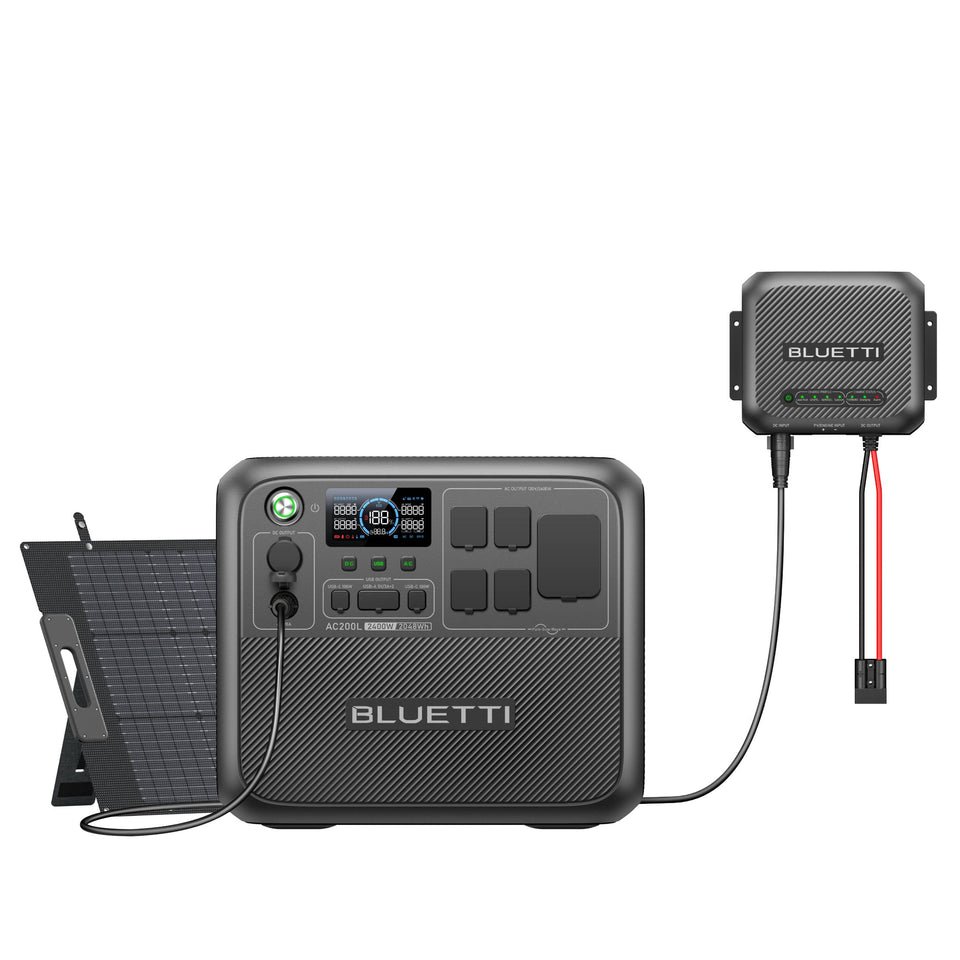
Models Discussed in This Article
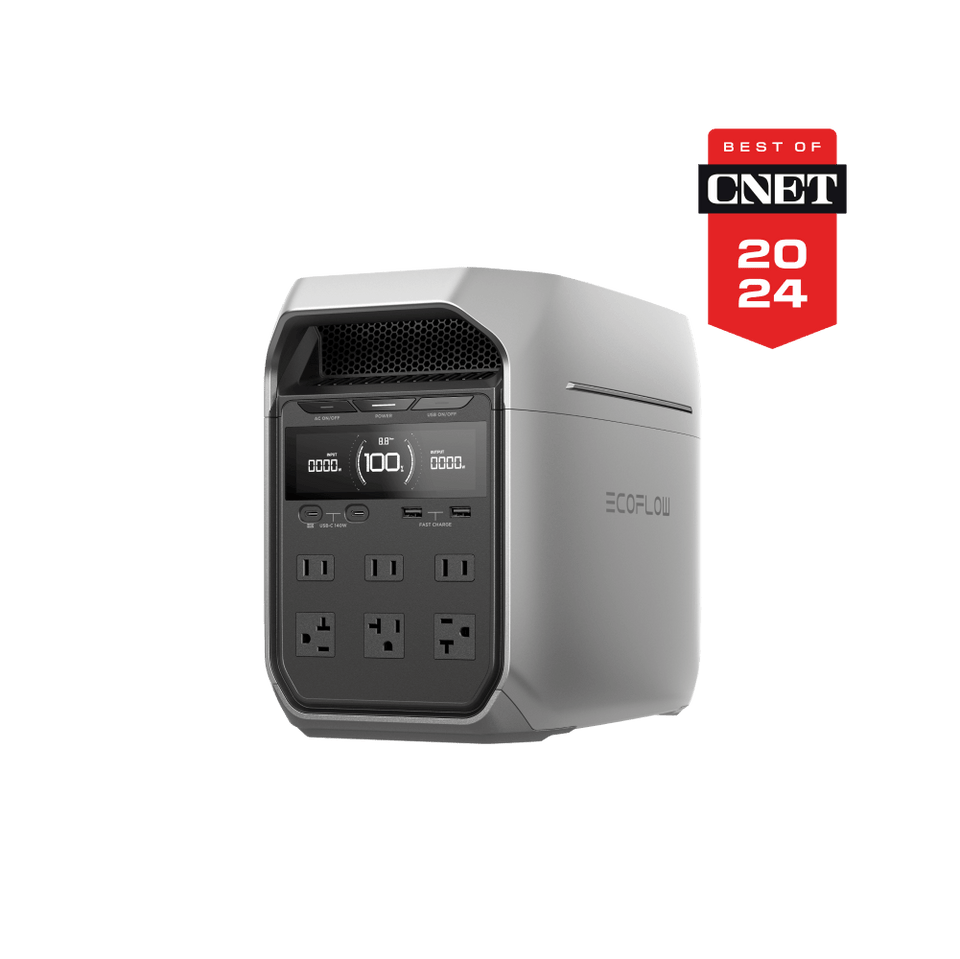
EcoFlow DELTA 3 Plus
Packs 1,000W dual-MPPT solar charging, sub-1-hour AC replenishment, and a sub-10 ms HID-capable UPS into a 27.6 lb chassis, making it more versatile than non-Plus 1kWh units.
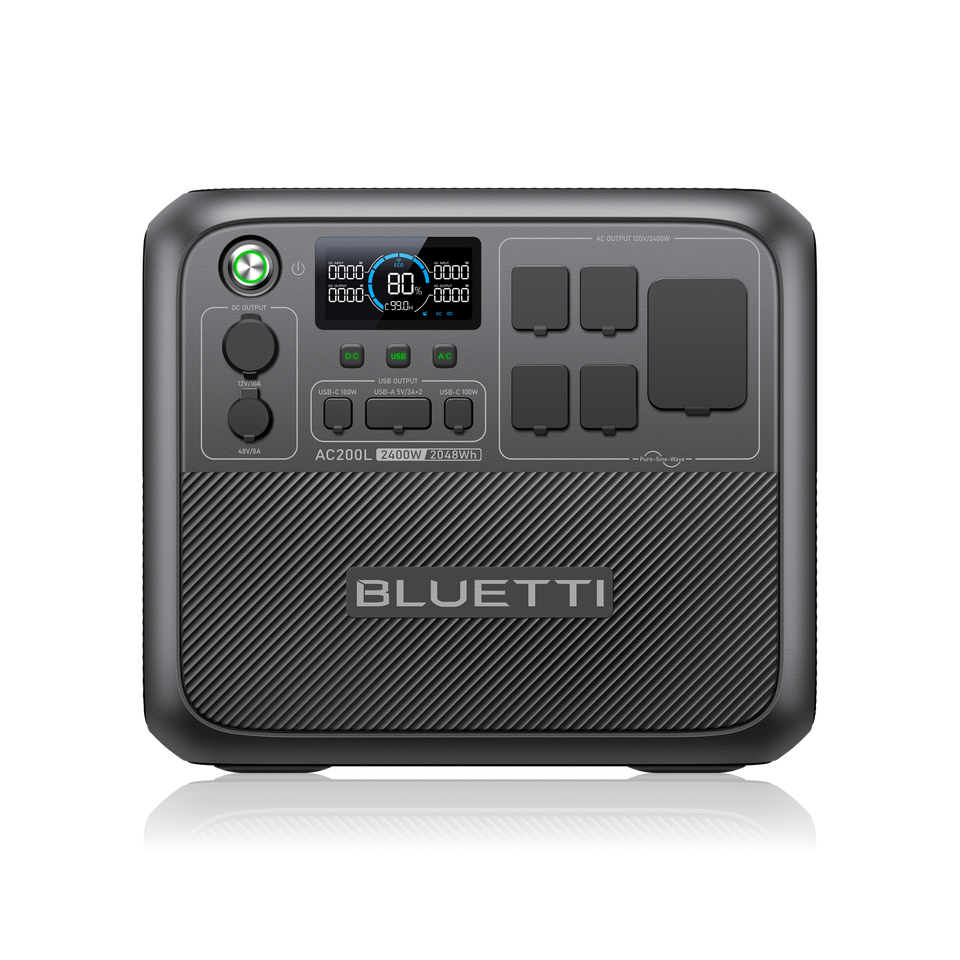
BLUETTI AC200L
Combines a high-efficiency 2,048Wh expandable platform, 1,200W high-voltage solar input (12–145V), and dedicated 30A TT-30R + 48V DC RV outputs at strong street pricing, trading away light weight and built-in wheels.

Anker SOLIX F3800
One of the most approachable plug-and-play 120V/240V wheeled units thanks to built-in NEMA 14-50R and L14-30R ports, though high idle overhead on light loads and the 60V solar cap (on the original non-Plus SKU) require careful sizing.
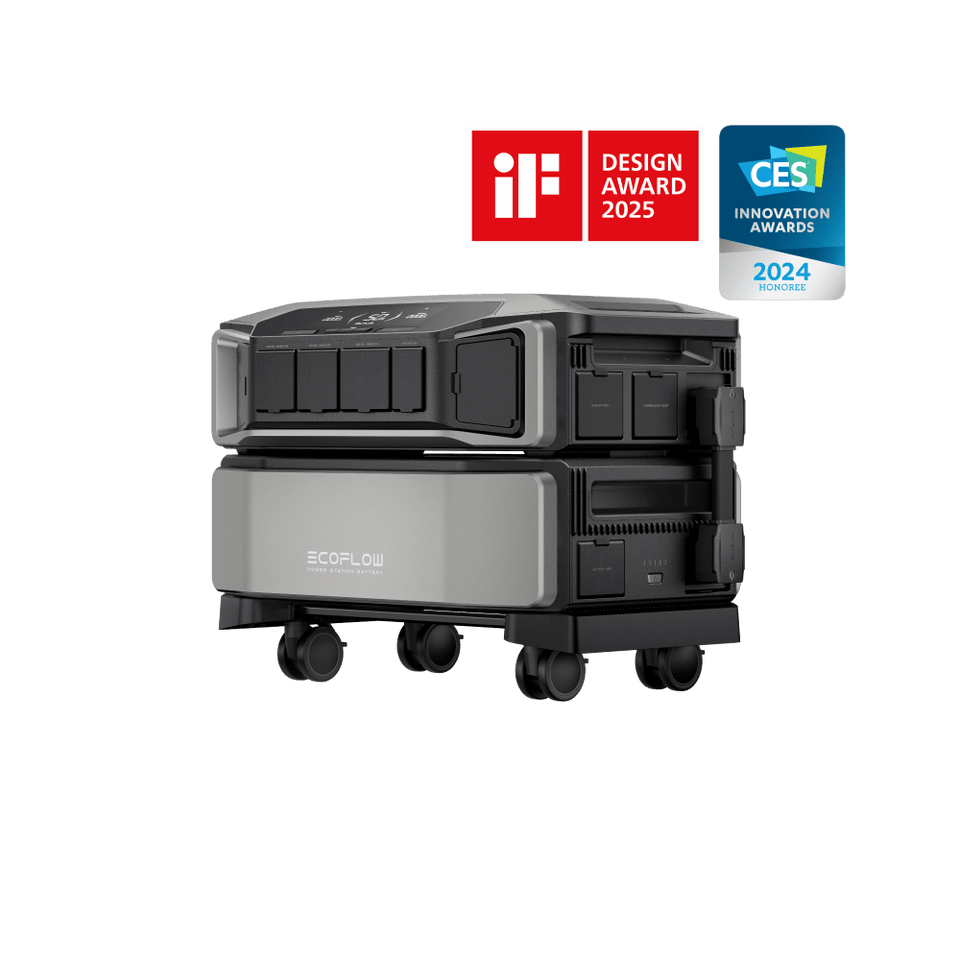
EcoFlow DELTA Pro Ultra
Built specifically for homeowners seeking high-voltage solar input (up to 5,600W) and modular 6kWh-per-stack scaling, though total kit cost and modular footprint exceed casual portable needs.
Frequently Asked Questions
Can a home battery backup work effectively without solar panels?+
Yes. Millions of apartment renters, HOA-restricted townhomes, and heavily shaded lots charge LiFePO4 power stations straight from standard 120V (or 240V) utility outlets. Fast 1,500W–2,400W AC chargers top up 1kWh–2kWh units in 56 minutes to 2 hours ahead of storms, providing silent indoor backup with zero exhaust or roof installation.
Does Time-of-Use (TOU) battery arbitrage actually save money without solar?+
Only when your utility's peak-to-off-peak rate spread exceeds ~25%–30%, because round-trip AC charging and discharging loses roughly 15%–22% as heat. In high-spread markets (such as California TOU plans with $0.25+/kWh evening peaks), cycling a 3,000–4,000 cycle LFP battery daily can trim peak bills while keeping a 30%–50% blackout reserve.
How do I recharge a non-solar home battery if a blackout lasts 3 to 5 days?+
Without rooftop solar, you have two fast replenishment options: recharge inside ~1.5–2.5 hours using a vehicle DC alternator charger (such as EcoFlow's 800W Alternator Charger while driving), or run a compact dual-fuel propane/gas inverter generator outdoors 20+ feet from your home to blast high-rate AC/DC charge into the indoor battery bank.
Is a sub-10ms UPS portable power station safe for desktop PCs and medical equipment?+
Units rated at 0 ms Online UPS (Jackery 5000 Plus, EcoFlow DELTA Pro Ultra direct ports) or <10 ms with USB HID shutdown support (EcoFlow DELTA 3 Plus, Anker SOLIX C300) handle sensitive desktop workstations, NAS drives, and routers cleanly. Standard <=20 ms EPS units protect refrigerators and CPAPs well, though active-PFC gaming PCs can occasionally reboot.
Sources & Technical References
- View Source →[1]Manufacturer SpecificationEcoFlow US OfficialVerified 2026-11-24EcoFlow DELTA 3 Plus Official Specifications
1,024Wh LFP, 1,800W continuous AC, 1,000W dual 500W MPPT solar, <10ms UPS, 1,500W X-Stream AC charging.
- View Source →[2]Manufacturer SpecificationBLUETTI US OfficialVerified 2026-11-24BLUETTI AC200L Portable Power Station Official Specifications
2,048Wh LFP, 2,400W continuous AC, 3,600W Power Lifting mode, NEMA TT-30R + 48V/8A DC RV port, 1,200W solar (12-145V).
- View Source →[3]Manufacturer SpecificationAnker SOLIX US OfficialVerified 2026-11-24Anker SOLIX F3800 Portable Power Station Official Specifications
North American model specs including NEMA 14-50R, L14-30R, 6,000W output, 3,840Wh capacity, and 11-60V dual solar input.
- View Source →[4]Third-Party Independent ReviewCNETVerified 2026-11-24CNET Portable Power Station Lab Efficiency & Refrigerator Runtime Benchmarks
Documents standardized refrigerator runtime and round-trip efficiency testing including BLUETTI AC200L (77.76% RTE, >29h fridge test) and Anker SOLIX F3800 (~25.68h fridge stress runtime due to dual-voltage inverter overhead).
- View Source →[5]Technical & Safety StandardNational Fire Protection Association (NFPA)Verified 2026-11-24NFPA 70 National Electrical Code (NEC) Transfer Equipment & Standby Power Overview
Governs transfer switches, panel interlocks, and prohibition of unsafe backfeeding on US residential electrical panels.