Anker SOLIX F3800 Market Positioning (2026): Comparing F3800 Plus, DELTA Pro Ultra & Explorer 5000 Plus
2026 240V market positioning: Anker SOLIX F3800 NEMA 14-50R EV/RV standout vs F3800 Plus (165V solar), EcoFlow DELTA Pro Ultra (450V), and Explorer 5000 Plus.
In 2026's 240V portable backup tier, the Anker SOLIX F3800 stands out for native single-box NEMA 14-50R EV Level 2 emergency charging and L14-30R inlet versatility near $2,999 street pricing. However, its original 11–60V / 2,400W solar limit trails the newer F3800 Plus (11–165V / 3,200W + TT-30R), EcoFlow DELTA Pro Ultra (450V High-PV / 5,600W solar, modular 6kWh stack), and Jackery Explorer 5000 Plus (7,200W AC / 14,400W surge).

When the Anker SOLIX F3800 arrived, simply squeezing native 120V/240V split-phase sockets onto a rolling battery gave it an open lane. By 2026, that lane is crowded with formidable alternatives: Anker’s own F3800 Plus revision, the modular EcoFlow DELTA Pro Ultra, and the high-surge Jackery Explorer 5000 Plus.
Understanding why the original F3800 still stands out—and exactly where competing architectures surpass it—requires looking past generic “whole-house” marketing claims into EV/RV outlet geometry, solar string voltage windows, and lifting physics.

2026 Flagship 240V Architectural Matrix
Every model in this tier delivers split-phase 120V/240V residential backup, yet each prioritizes a sharply different system bottleneck:
| Architectural Dimension | Anker SOLIX F3800 (Original A1790) | Anker SOLIX F3800 Plus (Revision) | EcoFlow DELTA Pro Ultra | Jackery Explorer 5000 Plus |
|---|---|---|---|---|
| Base LFP Capacity | 3,840Wh (3,000 cycles to 80%) |
3,840Wh (same BP3800 platform) |
6,144Wh (3,500+ cycles to 80%) |
5,040Wh (4,000 cycles to >=70%) |
| Max Stack Expansion | 26.88kWh (1 unit) / 53.76kWh (2 units) |
Same modular stack | 30.72kWh (1 inv) / 90kWh (3 inv) |
30.24kWh (1 unit) / 60.48kWh (2 units) |
| Continuous / Surge AC | 6,000W / 9,000W surge |
6,000W split-phase |
7,200W / 10,800W surge |
7,200W / 14,400W surge |
Integrated 240V / RV Ports |
NEMA 14-50R + L14-30R |
Adds 30A TT-30R RV + L14-30R |
NEMA L14-30R + L6-30R / SHP2 |
NEMA 14-50 + L14-30R |
Solar Max & Voc Range |
2,400W (11V–60V per XT60) |
3,200W (11V–165V dual MPPT) |
5,600W (80–450V + 30–150V) |
4,000W High-PV (135–450V + 16–60V) |
| Chassis & Lifting Mass | 132.3 lbs single wheeled box |
~135.6 lbs single wheeled box |
Split: ~70 lb inv + ~111.8 lb batt |
134.5 lbs single wheeled tower |
| Cold Charging Heater | None (32°F charge floor) |
None (32°F charge floor) |
Automatic self-heating (-4°F) |
None (32°F charge floor) |
| Direct UPS Speed | <20ms EPS (3 AC ports) |
<20ms EPS |
0 ms Online UPS (<20ms SHP2) |
0 ms Online UPS (<20ms STS) |
| Typical US Street Tier | ~$2,999–$3,399 |
Higher current-gen pricing | ~$4,199–$4,999 starter kit |
~$2,849–$3,299 |
(For a step-by-step look at Anker’s internal SKU transition, see our dedicated Anker SOLIX F3800 vs. F3800 Plus comparison.)
Where the Original F3800 Still Stands Out: Native 6,000W EV Level 2 & RV Portability
Despite newer competitors boasting higher solar ceilings and 7,200W inverters, the discounted original F3800 (~$2,999) retains a compelling niche built around single-chassis plug-and-play simplicity:
- Direct
NEMA 14-50REmergency Level 2 EV Top-Off: Because the original F3800 mounts a native240VNEMA 14-50Rreceptacle straight on top/front without optional transfer hubs, you can plug a standard portable EVSE (24Amax /~5.76kWsetting to stay within6,000Wcontinuous) directly into the power station. Set realistic expectations on range math: applying78%–88%conversion yields roughly3.0–3.38 kWhdelivered from a standalone3,840Whunit—translating to ~9 to 13 emergency miles on a typical3–4 mi/kWhEV. It will not replace a home wall charger daily, yet adding BP3800 packs (7.68kWh–11.52kWh) or capturing afternoon solar turns it into practical stranding or grid-down range insurance. - RV Shore Power Versatility: With both a
50A-style14-50Rand30AL14-30Routlet on a narrower luggage-style footprint (15.1 incheswide), rolling an F3800 into a truck bed (with ramps) or toy hauler handles50Atrailer air conditioners cleanly—something120V-only 2kWh boxes cannot match cleanly on dual-AC coaches. - Aggressive
~$2,999Street Entry Point: When comparing initial buy-in rather than full rooftop solar capability, an original F3800 under$3,000still undercuts a starter EcoFlow DELTA Pro Ultra stack by$1,200–$1,600, freeing budget for a licensed electrician to install a manualL14-30generator inlet box or an additionalBP3800battery.
Original F3800 vs. F3800 Plus: The 60V vs. 165V Solar & TT-30R Shift
Anker’s own F3800 Plus upgrade addressed the two loudest complaints from early adopters:
- Solar Ceiling Tripled (
60Vto165VVoc /2,400Wto3,200W): The original Model A1790 requires keeping solar panels strictly under60Vopen-circuit voltage (25A–27Aper channel), forcing multi-panel arrays into low-voltage parallel configurations. Raising the ceiling to165VVoc (3,200W) on the F3800 Plus lets rigid40V–50Vresidential-style panels connect in series strings (2–3panels per string, depending on cold-weather Voc margins) with thinner wire and lower amperage loss. - Native
TT-30RRV Convenience: Instead of requiring aL14-30R-to-TT-30Rdogbone adapter for single-pole30Atravel trailers, the F3800 Plus integrates a directTT-30Rsocket.
If you plan to recharge mostly via utility AC, a home transfer panel, or portable 12V/24V-class folding panels (<=60V), paying extra for the F3800 Plus offers little advantage over a heavily discounted original F3800.
Why EcoFlow DELTA Pro Ultra & Jackery 5000 Plus Win Certain Builds
For buyers prioritizing high-voltage solar, heavy surge motors, or zero-millisecond server protection, competing 2026 architectures hold clear structural leads over both F3800 versions:
- Choose EcoFlow DELTA Pro Ultra for High-Voltage Rooftop Solar & Modular Lifting: EcoFlow’s split design keeps the
~70 lbinverter head separate from the~111.8 lb6,144Whbattery—making basement stairs far safer than hauling a single132.3 lbF3800 block. More importantly, its80V–450VHigh-PV (4,000W) +30V–150VLow-PV (1,600W) dual MPPT inputs accept5,600Wtotal from standard residential string arrays, while internal below-freezing battery heating (-4°F) eliminates the F3800’s32°Fwinter charging lockout. Read our full head-to-head in EcoFlow DELTA Pro Ultra vs. Anker SOLIX F3800. - Choose Jackery Explorer 5000 Plus for
14,400WSurge &5,040WhStreet Value: At comparable~$2,999seasonal street pricing, Jackery packs5,040Whbase storage (nearly31%larger than F3800’s3,840Wh),7,200Wcontinuous /14,400Wpeak surge for hard-starting well pumps,0 msOnline UPS on direct sockets, and135V–450VHigh-PV (4,000W) support—losing out primarily to Anker on narrow suitcase geometry and slightly lower cycle-retention threshold (>=70%at4,000cycles vs Anker’s80%at3,000cycles). See the side-by-side breakdown in Jackery Explorer 5000 Plus vs. Anker SOLIX F3800. - Consider Zendure SuperBase V4600 for Motorized Transport & Mid-Voltage Solar: If
132.3 lbsof dead weight feels intimidating on sloped driveways, Zendure offers4,608WhLFP capacity,3,800Wcontinuous dual-voltage output,3,000W(12V–150V) solar input, and motorized rear drive wheels—though its shorter3-yearUS warranty and lower single-unit3,800Winverter lag behind Anker’s6,000Wcontinuous headroom and5-yearcoverage.
Bottom-Line Positioning Verdict
- Original Anker SOLIX F3800 fits best if you catch it discounted near
$2,999, value directNEMA 14-50R+L14-30Rports on a single rolling box, and recharge mostly via grid AC, a licensed Home Power Panel / transfer inlet, or low-voltage portable solar (<=60VVoc). - Skip the original F3800 if you want to tie directly into high-voltage
200V–400Vrigid solar strings (choose DELTA Pro Ultra or Explorer 5000 Plus, or check F3800 Plus up to165V), need sub-10ms Online UPS protection, or run a single150Wrefrigerator continuously without expansion (where dual-voltage idle draw trimmed CNET’s test to~25.68 hours).
Model true upfront cost per watt-hour across all four 240V platforms in our Price-per-Wh Calculator or review NEC panel integration rules in 120V vs. 240V Home Backup Explained.
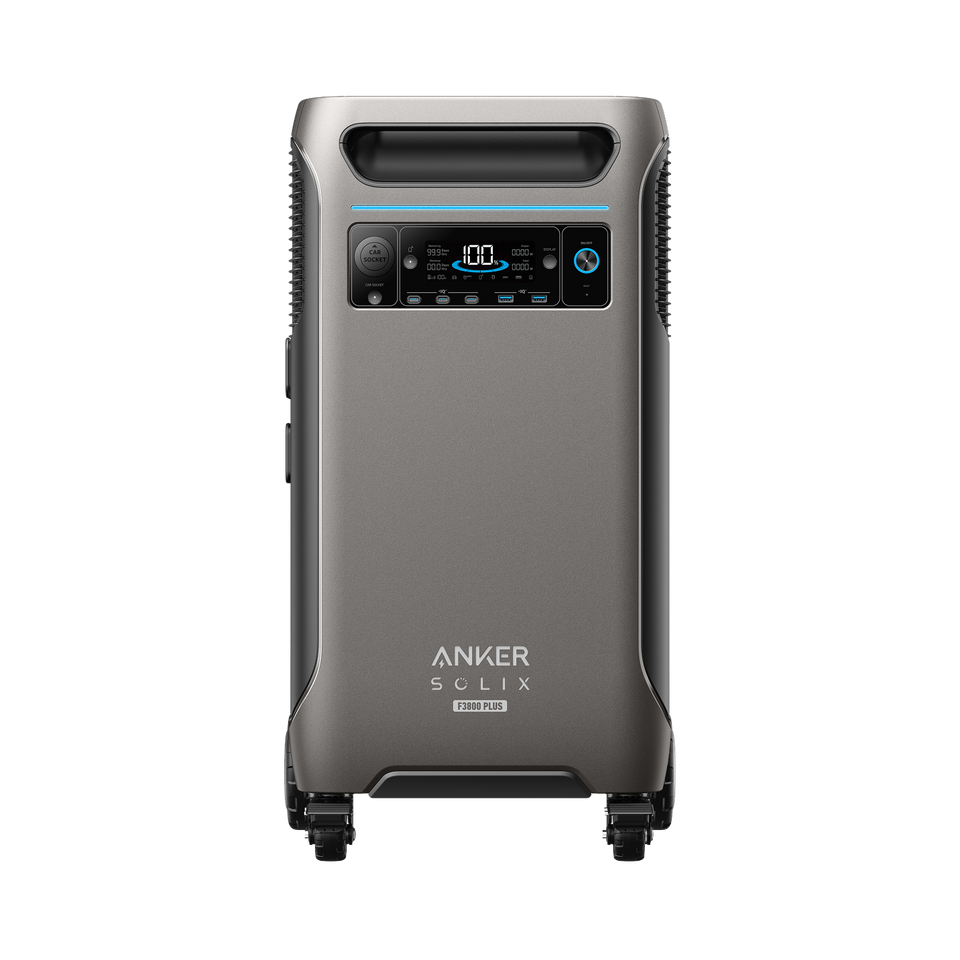
Models Discussed in This Article

Anker SOLIX F3800
One of the most approachable plug-and-play 120V/240V wheeled units thanks to built-in NEMA 14-50R and L14-30R ports, though high idle overhead on light loads and the 60V solar cap (on the original non-Plus SKU) require careful sizing.
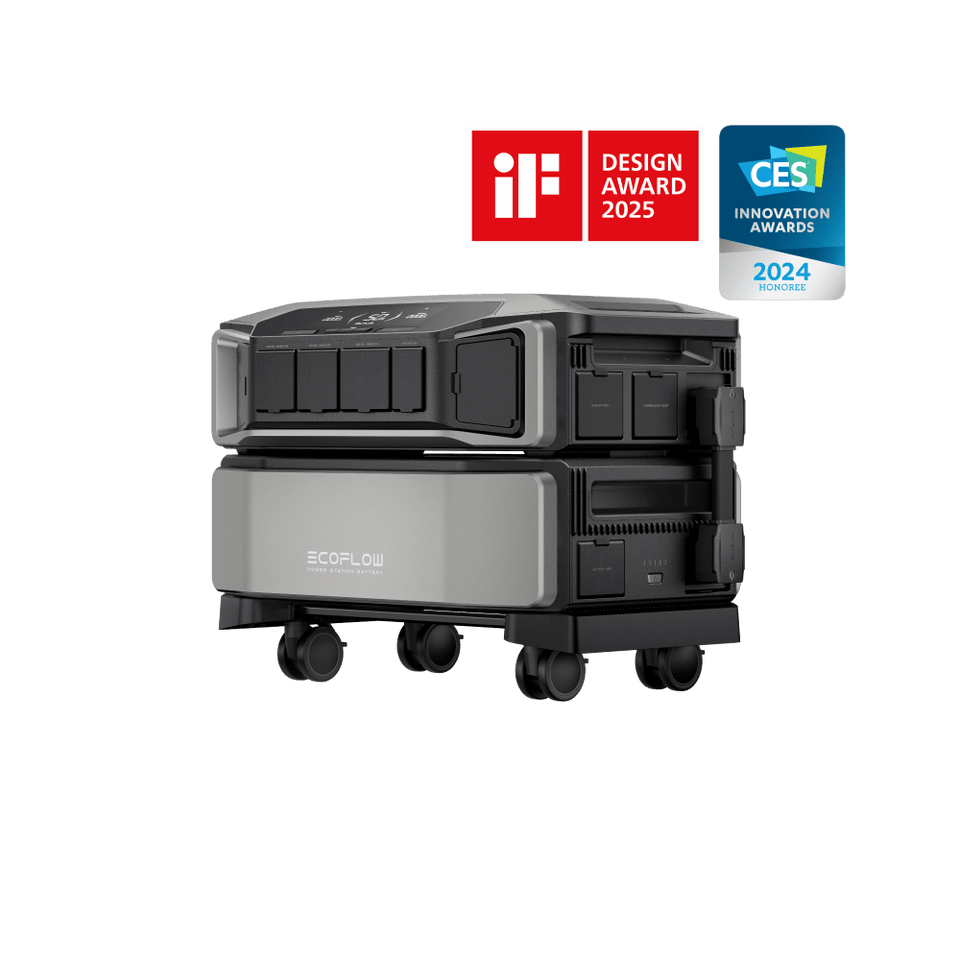
EcoFlow DELTA Pro Ultra
Built specifically for homeowners seeking high-voltage solar input (up to 5,600W) and modular 6kWh-per-stack scaling, though total kit cost and modular footprint exceed casual portable needs.
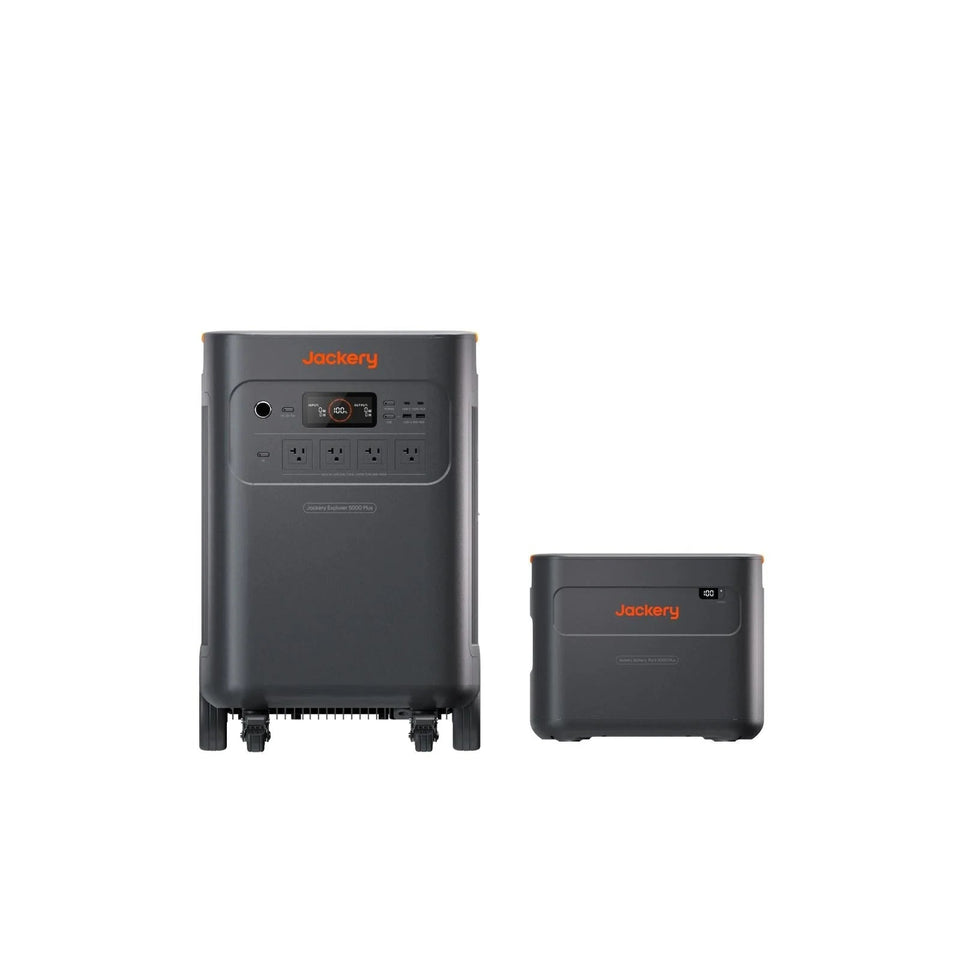
Jackery Explorer 5000 Plus
Combines a 5,040Wh LFP core, 7,200W split-phase output, 14,400W published surge headroom, and both High-PV (135–450V) and Low-PV solar inputs in a single wheeled chassis.
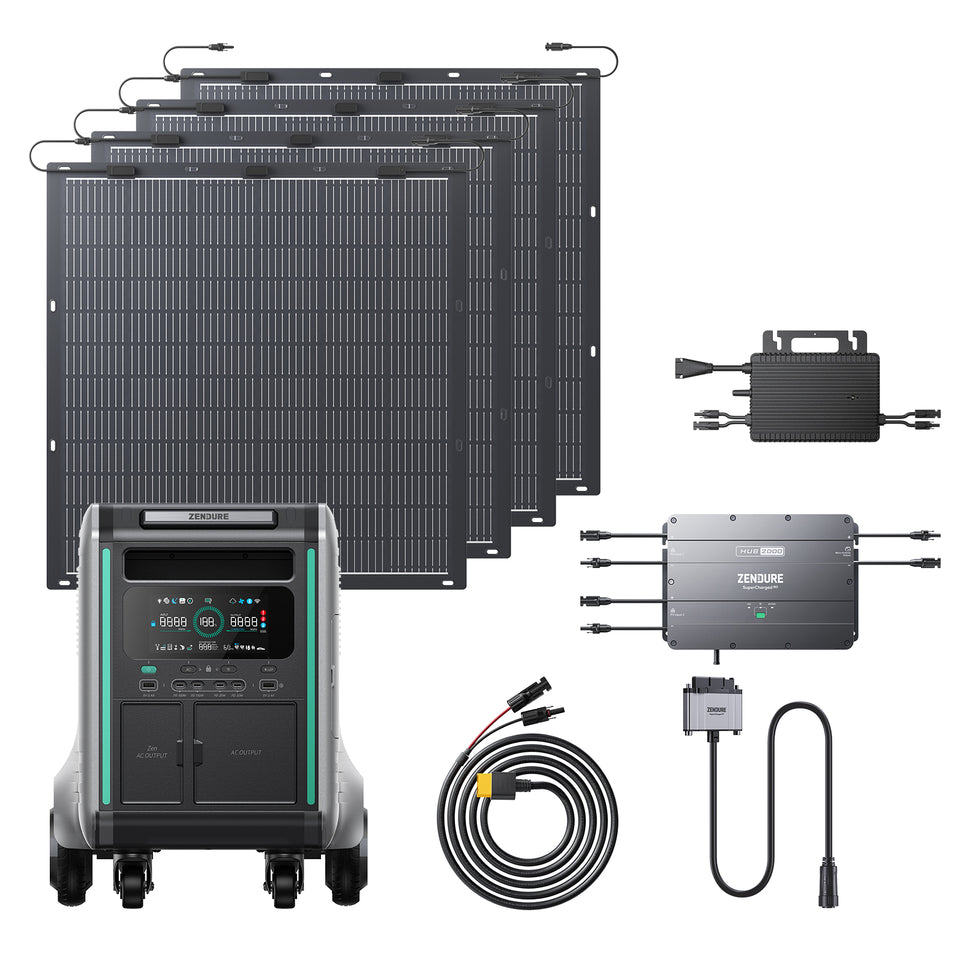
Zendure SuperBase V4600
Stands out for 3,000W single-port 12–150V solar flexibility and EV Level 2 charging support, though its 3,800W single-unit inverter output and 3-year US warranty trail 5-year 7,200W competitors.
Frequently Asked Questions
How many miles of EV charge can a single 3,840Wh Anker SOLIX F3800 deliver in an emergency?+
After applying 78%–88% inverter and vehicle onboard-charger conversion efficiency, a standalone 3,840Wh F3800 puts roughly 3.0 to 3.38 kWh into an EV battery—translating to approximately 9 to 13 miles of emergency range on typical 3–4 mi/kWh electric vehicles. Adding BP3800 expansion batteries or charging simultaneously via solar increases emergency recovery.
Why does the EcoFlow DELTA Pro Ultra beat the original F3800 for rooftop solar integration?+
The EcoFlow DELTA Pro Ultra features a dedicated High-PV input accepting 80V–450V Voc up to 4,000W (plus a 1,600W Low-PV channel for 5,600W total solar), allowing direct series-wired rigid rooftop arrays. The original F3800 stops at 60V Voc (2,400W max), while the newer F3800 Plus reaches 165V Voc (3,200W max).
Between the Anker SOLIX F3800 and Jackery Explorer 5000 Plus near $2,999, which gives more hardware per dollar?+
On raw specs per dollar, the Jackery Explorer 5000 Plus offers larger 5,040Wh base LFP capacity, 7,200W continuous / 14,400W surge output, 0 ms Online UPS on direct ports, and 450V High-PV input. The F3800 remains slightly more compact lengthwise with a narrower luggage-style footprint and easy BP3800 stacking up to 26.88kWh per unit.
Did the Anker SOLIX F3800 Plus completely replace the original F3800?+
In US retail channels, both SKUs frequently sell side by side—with the original F3800 discounted around $2,999 while the F3800 Plus commands a premium for its 11–165V / 3,200W solar upgrade and dedicated 30A TT-30R RV outlet.
Sources & Technical References
- View Source →[1]Manufacturer SpecificationAnker SOLIX US OfficialVerified 2026-11-24Anker SOLIX F3800 Portable Power Station Official Specifications
North American model specs including NEMA 14-50R, L14-30R, 6,000W output, 3,840Wh capacity, and 11-60V dual solar input.
- View Source →[2]Manufacturer SpecificationAnker SOLIX US OfficialVerified 2026-11-24Anker SOLIX F3800 Plus Official Product Page
Successor revision increasing PV voltage range up to 165V and solar input to 3,200W.
- View Source →[3]Manufacturer SpecificationEcoFlow US OfficialVerified 2026-11-24EcoFlow DELTA Pro Ultra Product Page & Specifications
Official North American 120V/240V split-phase inverter and 6,144Wh LiFePO4 battery module specs.
- View Source →[4]Manufacturer User ManualEcoFlow Support DocumentationVerified 2026-11-24EcoFlow DELTA Pro Ultra User Manual & Technical Datasheet
Documents High-PV (80-450V, 15A, 4,000W) and Low-PV (30-150V, 15A, 1,600W) limits, operating temps, and UPS switching behavior.
- View Source →[5]Manufacturer SpecificationJackery US OfficialVerified 2026-11-24Jackery Explorer 5000 Plus Official Product Specifications
5,040Wh LFP capacity, 7,200W/14,400W AC specs, High-PV (135-450V) and Low-PV (16-60V) limits, and warranty terms.