EcoFlow DELTA Pro vs. DELTA Pro Ultra: 120V Rolling Unit vs. 240V Modular Stack
Compare EcoFlow DELTA Pro (3,600Wh, 120V, 99 lbs) vs. DELTA Pro Ultra (6,144Wh+, 120V/240V, 5,600W solar) on output, UPS speed, and panel costs.
A single EcoFlow DELTA Pro delivers 3,600Wh and 3,600W continuous 120V output in a 99 lb wheeled chassis with 1,600W solar input and <30 ms EPS switching—ideal for 120V transfer switches and RVs. The EcoFlow DELTA Pro Ultra starts at 6,144Wh and 7,200W native 120V/240V split-phase output (~181.8 lbs stacked), scales to 90kWh, accepts 5,600W dual-MPPT solar (up to 450V Voc), and adds 0 ms Online UPS plus native Smart Home Panel 2 automation.
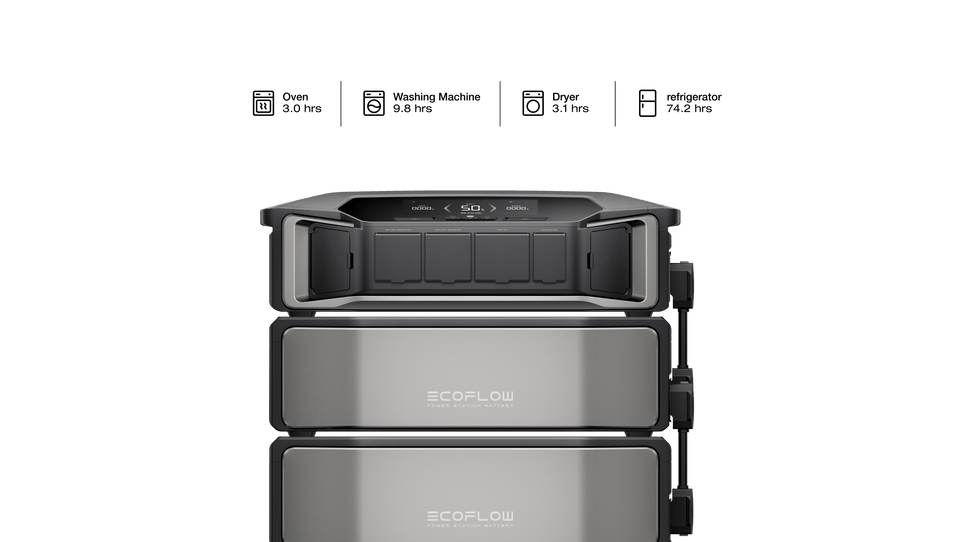
Buyers cross-shopping the EcoFlow DELTA Pro and the EcoFlow DELTA Pro Ultra run straight into a structural voltage wall before comparing price tags. A single DELTA Pro is a 120V rolling powerhouse capped at 3,600W, whereas the DELTA Pro Ultra is a stationary-first 120V/240V split-phase battery architecture built to feed a residential breaker panel up to 7,200W per inverter.
Because EcoFlow has shifted primary retail production toward newer DELTA Pro 3 and DELTA Pro Ultra hardware—leaving original DELTA Pro stock mostly at clearance pricing or third-party dealers—choosing between them in 2026 hinges on whether you want a single-chassis 99 lb mobile backup unit or a scalable whole-house storage stack.
Head-to-Head Electrical & Mechanical Comparison
| Specification | EcoFlow DELTA Pro (Original 120V) | EcoFlow DELTA Pro Ultra (1 Inverter + 1 Battery) |
|---|---|---|
| Base Battery Capacity | 3,600 Wh LiFePO4 (3,500+ cycles to 80%) |
6,144 Wh LiFePO4 (3,500+ cycles to 80%) |
| Max System Scalability | 10.8 kWh (1 unit + 2 Extra Batteries); 21.6–25 kWh dual-unit ecosystem |
30.7 kWh (5 batteries) per inverter; 90 kWh across 3 inverters + SHP2 |
| Continuous AC Output | 3,600W (120V single-phase; 7,200W with 2 units + hub) |
7,200W native (120V / 240V split-phase; 21.6 kW with 3 inverters) |
| Surge / Resistive Boost | 7,200W surge; 4,500W X-Boost (resistive only) |
10,800W surge (no voltage-dropping boost needed) |
| Heavy / Transfer Ports | 1 × 30A NEMA TT-30R (120V) + 4 × 120V 20A |
1 × 120V/240V 30A NEMA L14-30R + 4 × 120V 20A + Infinity/SHP2 |
| Solar PV Input Ceiling | 1,600W single MPPT (11V–150V Voc, 15A max) |
5,600W dual MPPT (80V–450V 4kW High-PV + 30V–150V 1.6kW Low-PV) |
| UPS / EPS Switchover | <30 ms EPS pass-through |
0 ms Online UPS (designated ports) / <20 ms Backup EPS & SHP2 |
| Weight & Portability | ~99 lbs monolithic rolling unit with pull handle |
~181.8 lbs base stack (~70 lb inverter + ~111.8 lb battery; wheel base) |
| Cold-Weather Charging | 32°F–113°F standard charge window |
-4°F–113°F with built-in self-heating battery pack |
| 2026 Market & Pricing | Clearance / third-party stock (~$1,799 street) |
Current production (~$4,199–$4,999 street kit; $5,799 MSRP) |
Inverter Voltage, Outlets, and Inductive Motor Headroom
The sharpest operational divide sits at the AC outlet bay. A single DELTA Pro outputs 120V only, delivering 3,600W continuous across four 20A household outlets and a native 30A NEMA TT-30R RV receptacle. That is ample headroom for a 120V kitchen refrigerator, gas furnace blower, microwave, sump pump, and camper air conditioner—all without adapters. Although EcoFlow’s X-Boost feature raises resistive output to 4,500W by lowering RMS voltage, never rely on voltage-dropping boost modes for sensitive electronics or inductive well/HVAC motors.
By contrast, the DELTA Pro Ultra outputs native 120V/240V split-phase power (7,200W continuous / 10,800W surge) from a single inverter head equipped with a 30A NEMA L14-30R receptacle and a dedicated panel port. That single stack can start and run 240V deep-well pumps, electric water heaters, or central air handler blowers (always verifying exact locked-rotor amperage data first—see our guide on 120V vs. 240V Home Backup Explained).
On low-voltage DC ports, notice one small omission: the DELTA Pro retains two DC5521 barrel ports alongside an Anderson output, dual 100W USB-C ports, and four USB-A ports, whereas the DELTA Pro Ultra drops the DC5521 outputs (2 × USB-A, 2 × 100W USB-C, 1 × 12.6V/30A Anderson), reflecting its shift toward breaker-panel residential backup.
Solar PV Architecture: 150V Portable Array vs. 450V Rooftop Strings
Solar recharging speed separates weekend outage survival from extended off-grid autonomy:
- DELTA Pro (
1,600Wmax,11V–150VVoc,15A): Handles portable folding kits and modest ground arrays nicely. Under real-world US irradiance (typically ~75%–85%of panel nameplate wattage after angle and heat derating), a1,200W–1,600Warray harvests roughly4.5–6.0 kWhover four to five peak sun hours—enough to refill the3,600Whpack in one clear afternoon. - DELTA Pro Ultra (
5,600Wmax via Dual MPPT): Combines a1,600WLow-PV input (30V–150VVoc,15A) with a4,000WHigh-PV input (80V–450VVoc,15A). That high-voltage MPPT window lets homeowners tie directly into rigid400Wresidential rooftop or ground-mounted strings (up to16.8 kWsolar across three parallel inverters) without messy parallel combiner boxes. Always confirm cold-weather open-circuit voltage (Voc) safety margins against the manual before connecting panels; our guide to Solar Input Limits & MPPT Explained walks through temperature multipliers.
Usable AC Energy, Idle Overhead, and UPS Latency
No lithium station delivers 100% of its nameplate watt-hours at the wall outlet. Across transparent AC efficiency modeling (78%–88% AC delivery vs. 88%–93% DC), a healthy 3,600Wh DELTA Pro yields roughly 2,808–3,168 Wh of usable 120V energy, while a 6,144Wh DELTA Pro Ultra base stack yields roughly 4,792–5,407 Wh.
However, larger dual-voltage inverters carry higher baseline idle draw when powering small intermittent loads like a 120W refrigerator or Wi-Fi router overnight. As documented in CNET Labs’ refrigerator runtime testing on competing split-phase systems like the Anker SOLIX F3800, 6kW+ dual-voltage architectures burn noticeable self-consumption wattage compared to lean 120V units when total household load sits under 300W. If you only plan to run a fridge, lights, and laptops, shutting off unused AC blocks—or stepping down to a compact 1kWh unit like the EcoFlow DELTA 3 Plus (<10 ms HID UPS)—saves meaningful energy.
Where UPS protection matters, the Ultra pulls cleanly ahead:
- DELTA Pro: Rated for
<30 msEPS transfer time—fine for refrigerators, sump pumps, and LED lighting, though picky workstation power supplies and NAS servers occasionally reboot at30 ms. - DELTA Pro Ultra: Uses redundant inverter synchronization to offer
0 msOnline UPS mode on designated AC outlets alongside<20 msautomatic backup transfer through the Smart Home Panel 2.
Portability vs. Modular Split Stacking
At ~99 lbs with integrated rear wheels and a luggage handle, one healthy adult can roll a DELTA Pro across a driveway, down a hallway, or up a ramp into a pickup bed—and a 12V RV traveler can bring 3,600Wh to a campsite easily.
The DELTA Pro Ultra takes the opposite approach. Combined base weight is ~181.8 lbs (~70 lb inverter sitting atop a ~111.8 lb 6kWh battery module on a rolling base), so it is virtually immovable up stairs once assembled. Yet splitting the stack into 70 lb and 112 lb pieces makes basement or garage placement far safer for two people than wrestling a monolithic 132+ lb all-in-one suitcase. Each inverter supports up to five stacked batteries (30,720Wh) vertically with short interlocking side cables rather than bulky floor-tangled umbilical cords.
Smart Home Panel 2 Compatibility & Real Transfer Switch Costs
Many buyers assume they can save money by buying a single discounted DELTA Pro today and plugging it into EcoFlow’s Smart Home Panel 2 (SHP2) later. Check the fine print first: EcoFlow’s Smart Home Panel 2 natively targets the DELTA Pro Ultra and DELTA Pro 3 ecosystems. While EcoFlow offers backward compatibility for the original DELTA Pro, a single DELTA Pro can only charge from SHP2—it cannot discharge to power home circuits. Integrating original DELTA Pros for backup power through SHP2 requires two DELTA Pro units wired into the SHP2-compatible Double Voltage Hub and a dedicated Power Input/Output Cable (legacy Infinity cables from the original Smart Home Panel are incompatible).
Compare realistic 2026 installed hardware paths before committing:
- Budget 120V Transfer Path (Single DELTA Pro): Pair one discounted DELTA Pro (
~$1,799remaining stock) with a120Vmanual critical-load transfer switch or generator inlet installed by a licensed electrician. You avoid$1,500–$1,900for an automated smart panel, keep full portability for RV trips, and stay compliant with NFPA 70 (NEC) isolation rules. - Automated Whole-Home Path (DELTA Pro Ultra + SHP2): Budget
~$4,199–$4,999for a starter kit (6,144Wh/7,200W) plus~$1,499–$1,899for Smart Home Panel 2 and licensed electrician permitting/labor. You gain240Vwell/HVAC support,450Vsolar harvesting, and automatic outage switchover—which you can cross-check against the Jackery Explorer 5000 Plus (5,040Wh,7,200WAC,14,400Wsurge) in our EcoFlow vs. Jackery Comparison.
Safety Reminder: Never attempt DIY electrical panel modifications or backfeed dryer outlets. All transfer switches, panel interlocks, and Smart Home Panel installations must be completed by a licensed US electrician in accordance with local building codes and NFPA 70 (NEC). See Transfer Equipment & Professional Installation for permit planning.
Bottom Line: Which EcoFlow Flagship Fits Your Outage Plan?
- Choose the EcoFlow DELTA Pro if you want a self-contained
99 lbrolling station under$2,000(while clearance inventory lasts) for a travel trailer (TT-30R), job site, or120Vmanual transfer switch backing up refrigerators, gas heating blowers, and electronics. - Choose the EcoFlow DELTA Pro Ultra if you need native
240Vsplit-phase appliances (L14-30Ror Smart Home Panel 2), high-voltage450Vsolar arrays, sub-zero self-heating batteries (-4°F),0 msOnline UPS ports, or modular multi-day capacity above10 kWh.
For side-by-side 240V comparisons against competing brands, open our DELTA Pro Ultra vs. Anker SOLIX F3800 guide or run your household circuit wattage in our Runtime Calculator.
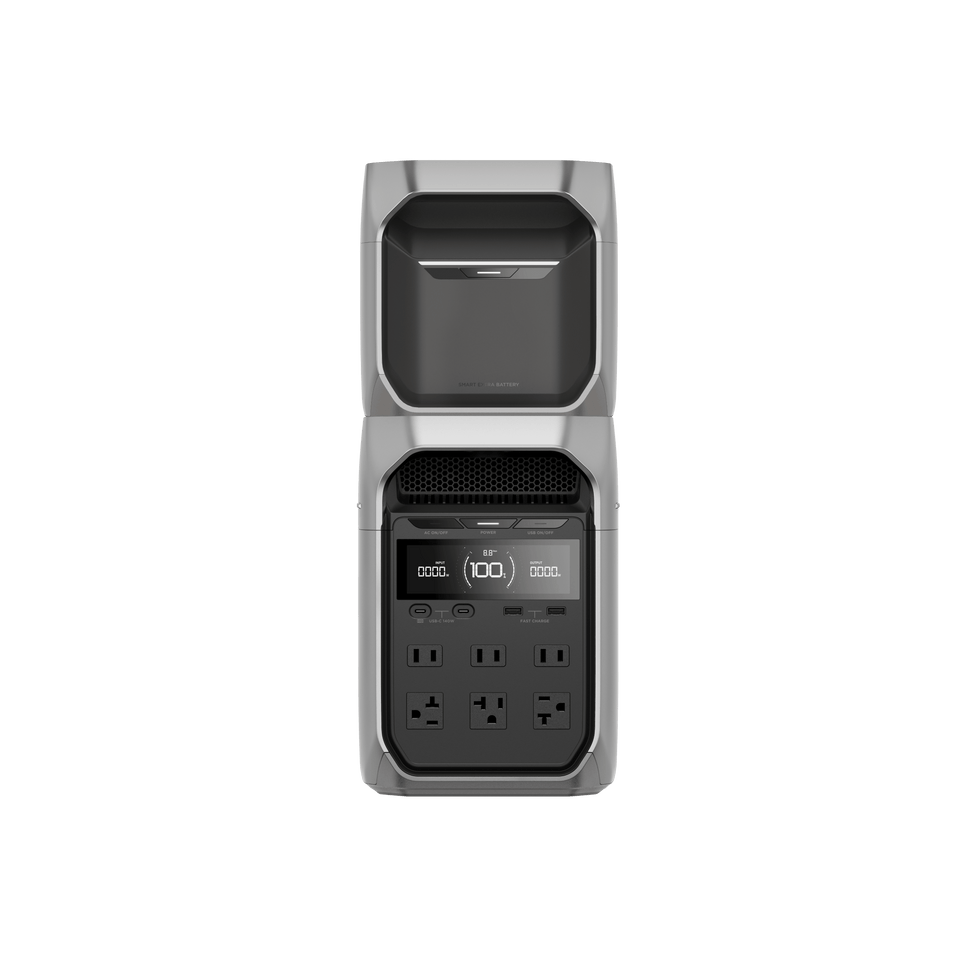
Models Discussed in This Article
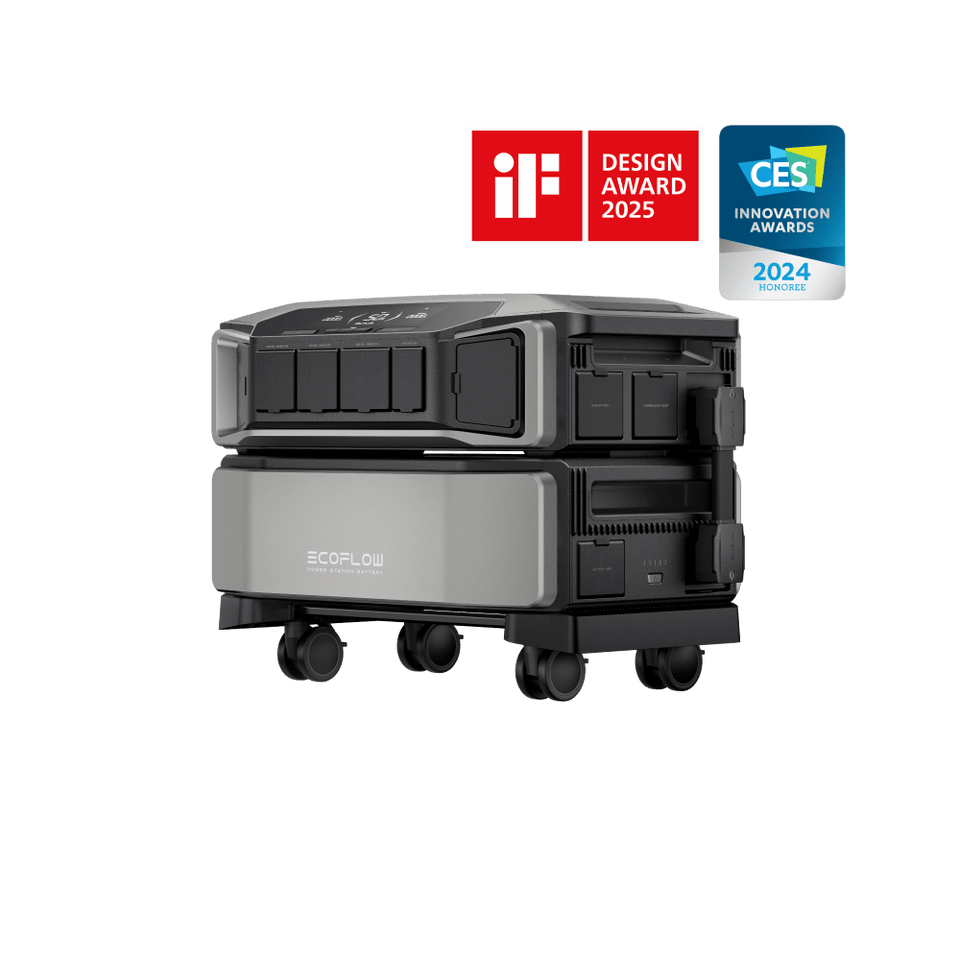
EcoFlow DELTA Pro Ultra
Built specifically for homeowners seeking high-voltage solar input (up to 5,600W) and modular 6kWh-per-stack scaling, though total kit cost and modular footprint exceed casual portable needs.
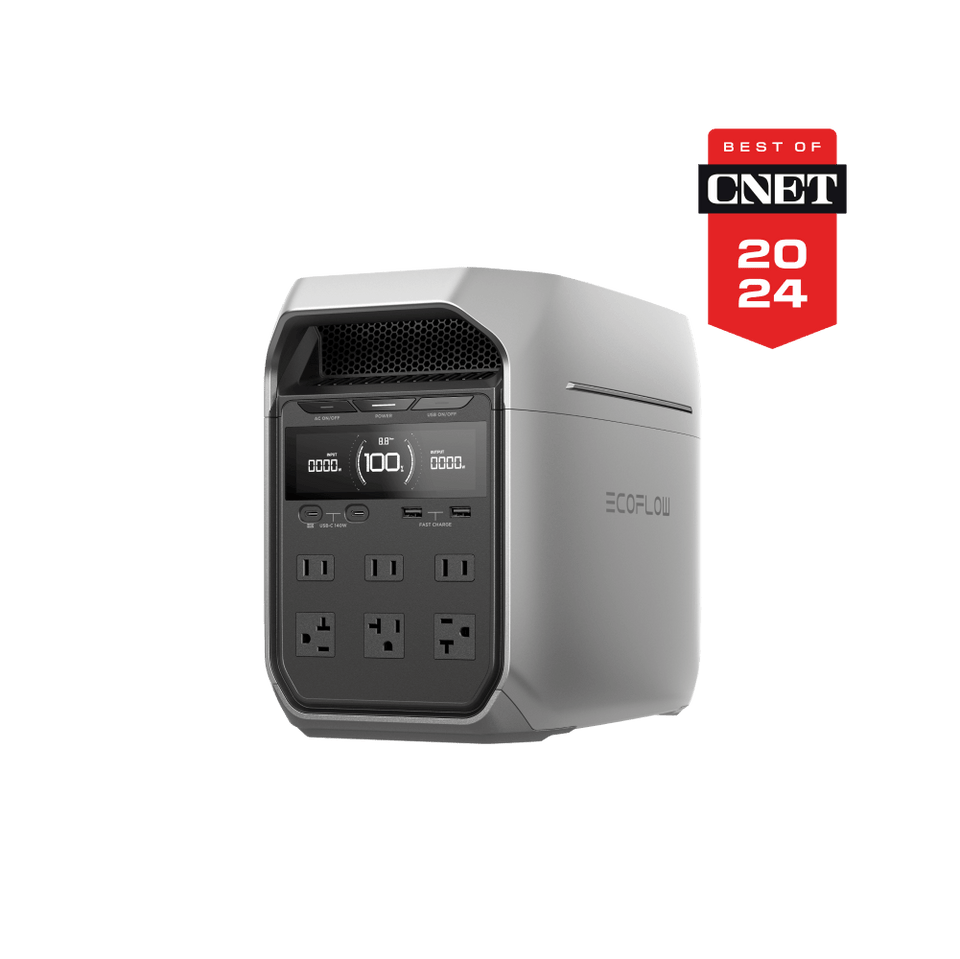
EcoFlow DELTA 3 Plus
Packs 1,000W dual-MPPT solar charging, sub-1-hour AC replenishment, and a sub-10 ms HID-capable UPS into a 27.6 lb chassis, making it more versatile than non-Plus 1kWh units.

Anker SOLIX F3800
One of the most approachable plug-and-play 120V/240V wheeled units thanks to built-in NEMA 14-50R and L14-30R ports, though high idle overhead on light loads and the 60V solar cap (on the original non-Plus SKU) require careful sizing.
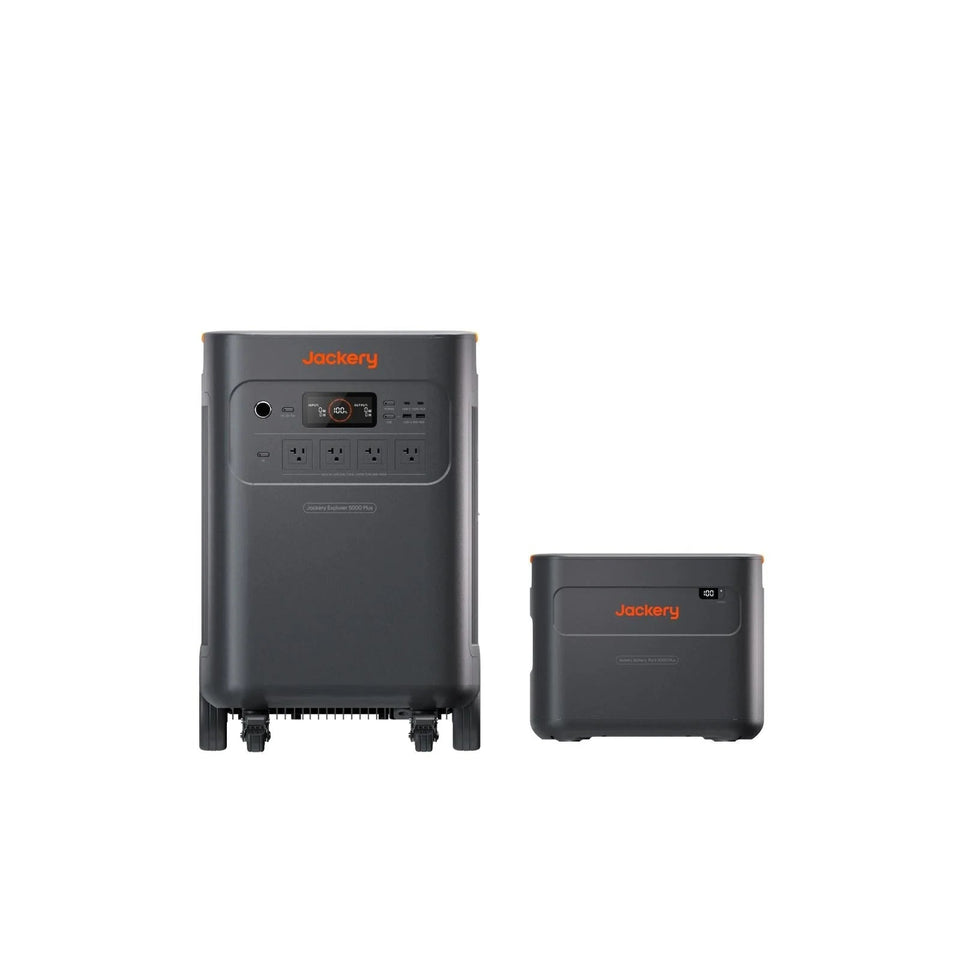
Jackery Explorer 5000 Plus
Combines a 5,040Wh LFP core, 7,200W split-phase output, 14,400W published surge headroom, and both High-PV (135–450V) and Low-PV solar inputs in a single wheeled chassis.
Frequently Asked Questions
Can a single EcoFlow DELTA Pro run 240V appliances like a well pump or clothes dryer?+
No. A standalone EcoFlow DELTA Pro only outputs 120V single-phase power (up to 3,600W continuous). To achieve 240V split-phase output with the legacy DELTA Pro platform, you must link two DELTA Pro units through EcoFlow's Double Voltage Hub—whereas a single EcoFlow DELTA Pro Ultra inverter outputs native 120V/240V up to 7,200W.
Does the original EcoFlow DELTA Pro work with the newer Smart Home Panel 2?+
Only partially and with extra hardware. According to EcoFlow's panel documentation, a single DELTA Pro connected to Smart Home Panel 2 can charge from the panel but cannot discharge to back up home circuits. Discharging into Smart Home Panel 2 requires two DELTA Pro units paired via the SHP2-compatible Double Voltage Hub and Power Input/Output Cable.
How much usable AC energy should I expect from a 3,600Wh DELTA Pro vs. a 6,144Wh DELTA Pro Ultra?+
Accounting for DC-to-AC inverter conversion and baseline idle draw (typically 78%–88% AC delivery across modern stations), expect roughly 2,808Wh–3,168Wh of usable AC energy from a single DELTA Pro and roughly 4,792Wh–5,407Wh from a base 6,144Wh DELTA Pro Ultra stack—remembering that larger 7,200W dual-voltage inverters consume more standby power under light 100W loads.
Which unit makes more sense for a 30A RV vs. permanent garage home backup?+
For RV boondocking and mobile job sites, the DELTA Pro is vastly easier to live with thanks to its 99 lb suitcase wheels, telescoping handle, and built-in 30A NEMA TT-30R RV outlet. For stationary residential backup tied into a licensed electrician's transfer panel, the DELTA Pro Ultra eliminates dual-unit hubs and supports rooftop-grade 450V solar.
Sources & Technical References
- View Source →[1]Manufacturer SpecificationEcoFlow US OfficialVerified 2026-11-24EcoFlow DELTA Pro Ultra Product Page & Specifications
Official North American 120V/240V split-phase inverter and 6,144Wh LiFePO4 battery module specs.
- View Source →[2]Manufacturer User ManualEcoFlow Support DocumentationVerified 2026-11-24EcoFlow DELTA Pro Ultra User Manual & Technical Datasheet
Documents High-PV (80-450V, 15A, 4,000W) and Low-PV (30-150V, 15A, 1,600W) limits, operating temps, and UPS switching behavior.
- View Source →[3]Manufacturer SpecificationEcoFlow US OfficialVerified 2026-11-25EcoFlow DELTA Pro Portable Power Station Specifications
3,600Wh LFP expandable up to 25kWh ecosystem, 3,600W continuous AC (7,200W split-phase with Double Voltage Hub), 1,600W 11-150V solar input.
- View Source →[4]Technical & Safety StandardNational Fire Protection Association (NFPA)Verified 2026-11-24NFPA 70 National Electrical Code (NEC) Transfer Equipment & Standby Power Overview
Governs transfer switches, panel interlocks, and prohibition of unsafe backfeeding on US residential electrical panels.
- View Source →[5]Third-Party Independent ReviewCNETVerified 2026-11-24CNET Portable Power Station Lab Efficiency & Refrigerator Runtime Benchmarks
Documents standardized refrigerator runtime and round-trip efficiency testing including BLUETTI AC200L (77.76% RTE, >29h fridge test) and Anker SOLIX F3800 (~25.68h fridge stress runtime due to dual-voltage inverter overhead).