EcoFlow vs. Jackery: Complete Solar Generator Comparison Guide (2026)
Compare EcoFlow and Jackery solar generators across every 2026 tier: 300Wh camp packs, 1kWh-2kWh blackout units, and 240V whole-home battery backup hubs.
Both EcoFlow and Jackery build current 2026 models with LiFePO4 cells, yet their priorities diverge across tiers. EcoFlow leads in fast AC/solar charging (up to 1,000W on DELTA 3 Plus and 5,600W on DELTA Pro Ultra), modular expansion, and sub-10 ms HID UPS support. Jackery counters with lighter Cell-to-Body weight-per-Wh (39.5 lbs on the 2,042Wh Explorer 2000 v2) and 14,400W surge specs on the 240V Explorer 5000 Plus, with real AC delivery averaging 78%–88% of rated Wh.

Comparing EcoFlow and Jackery used to be a simple chemistry argument: EcoFlow sold fast-charging LiFePO4 packs, while Jackery relied on older 500-cycle nickel-manganese-cobalt (NMC) cells and slow external charging bricks. That era is over. Across current 2026 US lineups, both brands standardize on long-life LiFePO4 (LFP) cells, integrate internal bidirectional AC chargers, and back flagship units with 5-year warranty paths.
Instead of legacy chemistry differences, buying between these two brands now comes down to three engineering bottlenecks documented in manufacturer datasheets and independent third-party reviews: solar MPPT wattage, proprietary expansion architecture, and weight-per-watt-hour. Evaluating those trade-offs tier by tier—from 300Wh camp packs up to 240V split-phase home hubs—reveals clear winners for different budgets and outage profiles.
How Both Brands Evolved: LiFePO4 Parity & Realistic Output
Confirm you are evaluating current LFP hardware rather than clearance legacy stock (like the NMC EcoFlow DELTA 1300 or original Jackery Explorer 500/1000 v1). Moving to LFP jumps rated lifespan from ~500–800 cycles to 3,000–4,000+ cycles—explained in our LiFePO4 vs. NMC Batteries guide.
Watch two subtle spec details across current LFP generations:
- Retention Metric (
80%vs.>=70%): EcoFlow rates the DELTA 3 Plus at 4,000 cycles to 80% (3,500+ on DELTA Pro Ultra); Jackery rates the Explorer 2000 v2 and Explorer 5000 Plus at 4,000 cycles to >=70%. - Usable Energy: Inverter conversion and idle draw yield roughly 78%–88% of rated Wh over AC outlets, or 88%–93% via USB-C/12V DC with AC switched off.
Tier 1 — 300Wh Camp Packs: RIVER 2 vs. Explorer 300 Plus
For sub-10 lb day trips, phones, and cameras, compare EcoFlow’s RIVER 2 against Jackery’s Explorer 300 Plus (skipping legacy NMC Explorer 240 v1 stock).

| Specification | EcoFlow RIVER 2 | Jackery Explorer 300 Plus |
|---|---|---|
| Capacity / Chemistry | 256Wh (LiFePO4, 3,000+ to 80%) | 288Wh (LiFePO4, 3,000–4,000 to >=80%) |
| Continuous / Surge AC | 300W (600W surge / X-Boost) | 300W (600W peak surge) |
| AC Recharge | ~60 min (360W X-Stream) | ~2 hrs (AC) / ~4 hrs (100W USB-C) |
| Solar & Connector | 110W max (11–30V, XT60) | 100W max (12–27V via USB-C port) |
| USB-C / Weight | 1 × 60W PD / 7.7 lbs (33.2 Wh/lb) | 1 × 100W + 1 × 15W / 8.3 lbs (34.7 Wh/lb) |
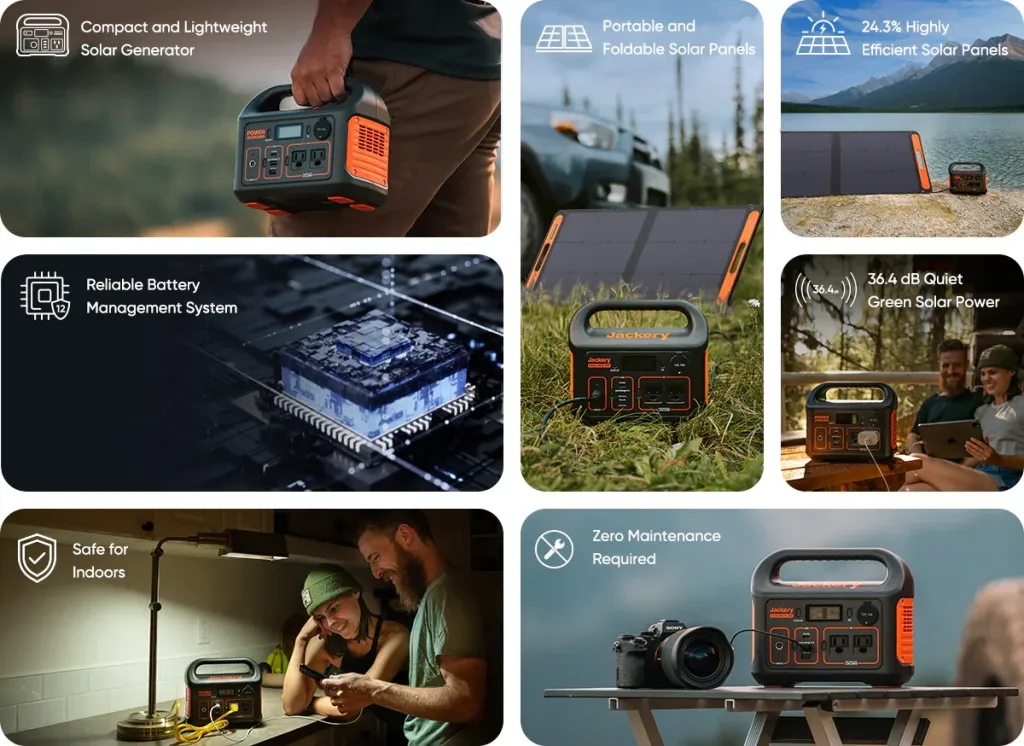
Tier 1 Takeaway: RIVER 2 wins fast 60-minute wall turnarounds and rugged XT60 solar input (110W), while Explorer 300 Plus adds +32Wh storage and 100W bidirectional USB-C PD for laptops (routing its 100W solar cable through USB-C).
Tier 2 — 1kWh to 2kWh Blackout Stations: DELTA Series vs. Explorer v2
The 1,000Wh–2,048Wh segment represents the core US blackout and overlanding market—where a unit can run a full-size kitchen refrigerator intermittently, brew coffee, or power medical CPAP equipment overnight. Here, EcoFlow’s modular DELTA 2 / DELTA 3 Plus and Jackery’s Cell-to-Body Explorer 1000 v2 / Explorer 2000 v2 illustrate completely opposite engineering priorities.
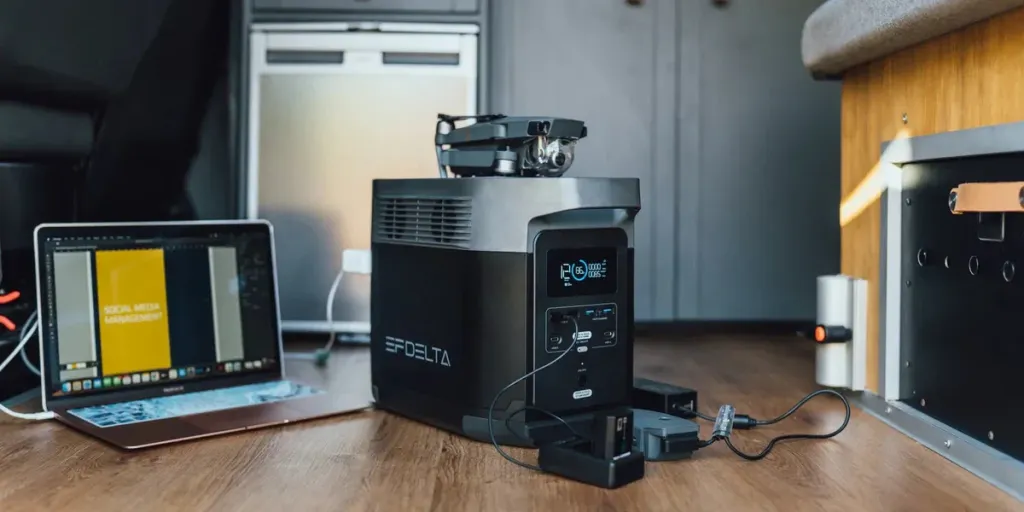
| Specification | EcoFlow DELTA 2 | EcoFlow DELTA 3 Plus | Jackery Explorer 1000 v2 | Jackery Explorer 2000 v2 |
|---|---|---|---|---|
| Capacity (Rated) | 1,024Wh | 1,024Wh | 1,070Wh | 2,042Wh |
| Expandable Capacity | Up to 3,040Wh | Up to 5,120Wh | Not expandable | Not expandable |
| Continuous / Surge AC | 1,800W / 2,700W | 1,800W / 3,600W | 1,500W / 3,000W | 2,200W / 4,400W |
| AC Outlets | 6 × 120V | 6 × 120V | 3 × 120V | 3 × 120V |
| Solar Input Ceiling | 500W (11–60V, 15A) | 1,000W (Dual 500W MPPT, 11–60V) | 400W (Dual DC8020, 16–60V) | 400W (Dual DC8020, 16–60V) |
| AC Fast Charge | 1,200W (~80 mins) | 1,500W (~56 mins) | ~1,000W (~1.7 hrs) | 1,800W (~1.7–2.5 hrs*) |
| UPS Transfer Speed | ~30 ms EPS | <10 ms + USB HID |
<=20 ms EPS |
<=20 ms EPS |
| Weight / Density | ~27.0 lbs (37.9 Wh/lb) | 27.6 lbs (37.1 Wh/lb) | ~23.8 lbs (45.0 Wh/lb) | 39.5 lbs (51.7 Wh/lb) |
Note: OutdoorGearLab’s standardized test on the Jackery Explorer 2000 v2 measured approximately 2.5 hours for a full 0–100% AC wall recharge (~817 Wh/hr average), whereas Emergency Super Charge mode trims time toward ~1.7 hours.
Key Trade-Offs in the 1kWh–2kWh Tier
- Weight-per-Wh Dominance (Jackery): Jackery’s structural Cell-to-Body (CTB) layout integrates battery cells directly into the frame. That cuts the
1,070WhExplorer 1000 v2 down to 23.8 lbs (45.0 Wh/lb) and lets the2,042WhJackery Explorer 2000 v2 deliver 51.7 Wh/lb at just 39.5 lbs—earning top portability honors in OutdoorGearLab and TechRadar hands-on evaluations. - Solar Velocity & Expandability (EcoFlow): Jackery pays for that ultra-dense CTB shell by eliminating battery expansion ports entirely and capping solar input at 400W across both the 1000 v2 and 2000 v2. By contrast, even though the EcoFlow DELTA 3 Plus holds half the onboard energy (
1,024Wh), its dual 500W MPPT controllers (1,000W max) recover solar power 2.5× faster in direct sunlight, its proprietary expansion port scales up to 5,120Wh, and its<10 msUPS with USB HID communication handles desktop workstations and NAS servers safely. - X-Boost Voltage Step-Down Caveat: Both DELTA 2 and DELTA 3 Plus feature EcoFlow’s X-Boost mode to run purely resistive heating loads (such as basic kettles or space heaters) slightly past
1,800Wby lowering output voltage. Never treat X-Boost as real continuous inverter capacity for refrigerator compressors, power saws, or sensitive electronics—those require Jackery Explorer 2000 v2’s native2,200W(4,400Wsurge) headroom or a larger inverter.
Tier 3 — Whole-Home 240V Hubs: DELTA Pro Ultra vs. Explorer 5000 Plus
When outages stretch past 12 hours or require powering hardwired 240V split-phase circuits—such as well pumps, septic lift pumps, or heat-pump air handlers—both brands step up to residential modular platforms.
| Specification | EcoFlow DELTA Pro Ultra | Jackery Explorer 5000 Plus |
|---|---|---|
| Base Storage (LFP) | 6,144Wh (1 inverter + 1 battery) | 5,040Wh (single tower) |
| Max Expansion | 30.72kWh (1 inv) / 90kWh (3 inv) | 30.24kWh (1 inv) / 60.48kWh (2 inv) |
| Continuous / Surge AC | 7,200W / 10,800W (120V/240V) | 7,200W / 14,400W (120V/240V) |
| High-PV Solar Limit | 4,000W (80–450V Voc, 15A) | 4,000W (135–450V Voc, 15A) |
| Low-PV Solar Limit | 1,600W (30–150V Voc, 15A) | 1,200W (16–60V Voc, dual ports) |
| Combined Solar Ceiling | 5,600W | 4,000W High-PV + 1,200W Low-PV |
| Cold-Garage Charging | -4°F to 113°F (built-in self-heating) | 32°F to 113°F (above-freezing only) |
| Lifting Weight | 181.8 lbs split (~70 lb inv / ~111.8 lb batt) | 134.5 lbs monolithic wheeled chassis |
| Typical Base Street Price | ~$4,599 (MSRP $5,799) | ~$2,999 (MSRP $3,499) |
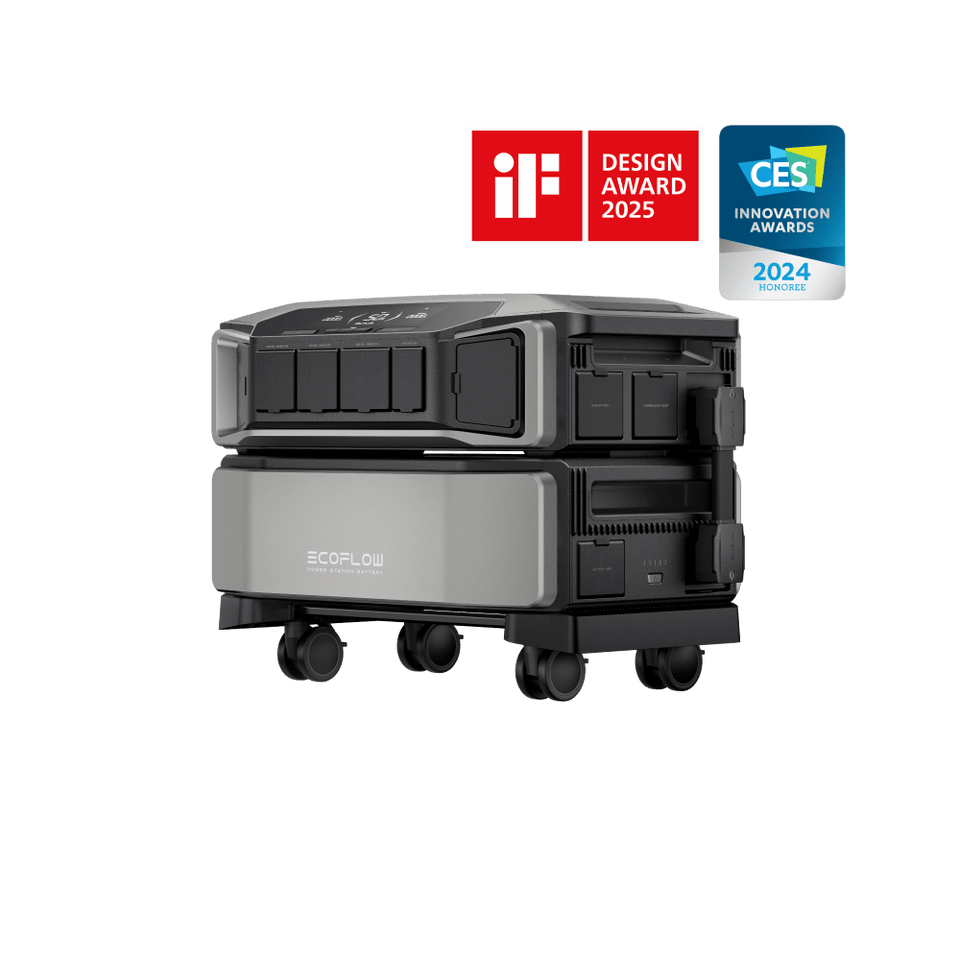
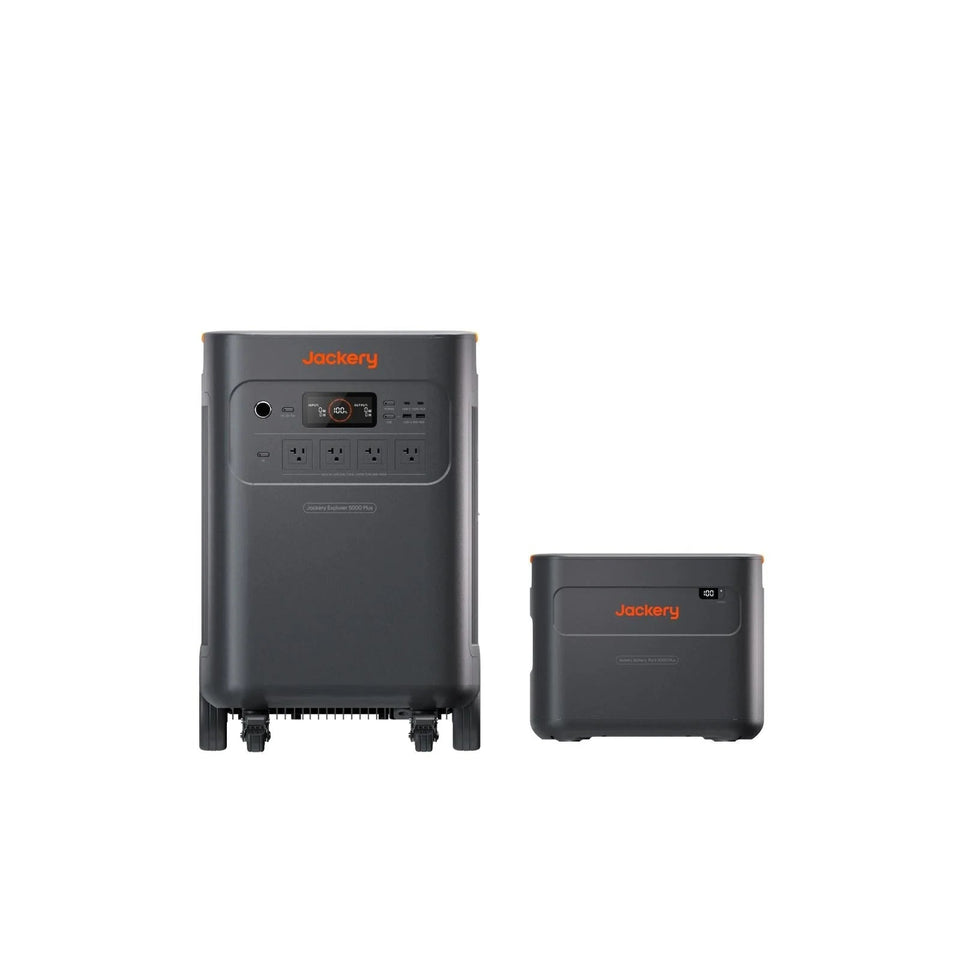
Here, EcoFlow DELTA Pro Ultra behaves like a mini home-energy microgrid: separating the ~70 lb inverter from ~111.8 lb battery slabs eases two-person placement, 5,600W combined dual-PV headroom handles large rigid roof arrays, and automatic sub-freezing cell self-heating down to -4°F allows safe charging in unheated winter garages. Jackery Explorer 5000 Plus counters by cutting base 240V entry pricing by roughly $1,600, raising published peak surge headroom to 14,400W, and putting both NEMA 14-50 and L14-30R outlets onto a single 134.5 lb wheeled unit.
NEC & Installation Reminder: Neither unit can legally or safely feed household branch circuits through a dryer cord or wall outlet. Connecting either 240V system to a home electrical panel requires a listed transfer switch, interlock kit, or manufacturer smart panel installed by a licensed electrician under NFPA 70 (NEC) rules. Read our Transfer Equipment Guide before sizing panel kits.
Cross-Tier Trade-Offs: Expansion Ports, Solar Voltage & Cost-per-Wh
Looking across all three tiers highlights two brand-wide habits that determine satisfaction years after checkout:
- Proprietary Port Lock-In vs. Non-Expandable Simplicity: EcoFlow uses heavy proprietary battery expansion cords across DELTA 2, DELTA 3 Plus, and DELTA Pro Ultra—locking you into EcoFlow’s Smart Extra Batteries (and requiring careful generation matching, since DELTA 2 vs. DELTA 3 vs. Pro Ultra cables differ). Jackery splits its catalog cleanly: Explorer Plus models expand with matching Jackery battery packs, while Explorer v2 models strip out expansion ports altogether to drop weight and cost.
- Solar Panel Connector Friction: On portable tiers, EcoFlow’s
XT60iinputs simplify connecting generic rigid or folding MC4 panels (just watch the60VVoc limit on DELTA 2/3 Plus so cold winter open-circuit voltage doesn’t over-volt the MPPT). Jackery’s portableDC8020ports (16–60Von 1000 v2 / 2000 v2) frequently require adapters when using non-Jackery solar panels, and the400Wceiling slows off-grid recovery on the2,042Wh2000 v2.
Buying Matrix: Choosing Between EcoFlow and Jackery in 2026
| Buyer Profile | Recommended Brand & Model | Key Engineering Reason |
|---|---|---|
| Apartment blackout & trunk camper | Jackery Explorer 2000 v2 | Unbeatable 39.5 lb weight for 2,042Wh (51.7 Wh/lb) and 2,200W AC output. |
| Home office UPS & solar boondocker | EcoFlow DELTA 3 Plus | <10 ms HID UPS for PCs/NAS plus 1,000W dual-MPPT solar and 56-min AC charge. |
| Sub-10 lb travel & fast weekend top-offs | EcoFlow RIVER 2 or Jackery 300 Plus | Choose RIVER 2 for 60-min wall speed and XT60 solar; 300 Plus for 100W USB-C + 288Wh. |
| Cold-climate 240V home backup | EcoFlow DELTA Pro Ultra | Built-in -4°F self-heating, 5,600W dual-PV solar ceiling, and 6.14kWh–90kWh scaling. |
| Budget-conscious 240V single tower | Jackery Explorer 5000 Plus | 7,200W / 14,400W surge and 5,040Wh LFP at ~$2,999 typical street price. |
Still narrowing down exact loads and solar array recharge hours? Run your appliances through our Runtime Calculator and Solar Charging Calculator, or compare individual specs directly in our EcoFlow vs. Jackery brand hub and Best Solar Generators roundup.
Models Discussed in This Article
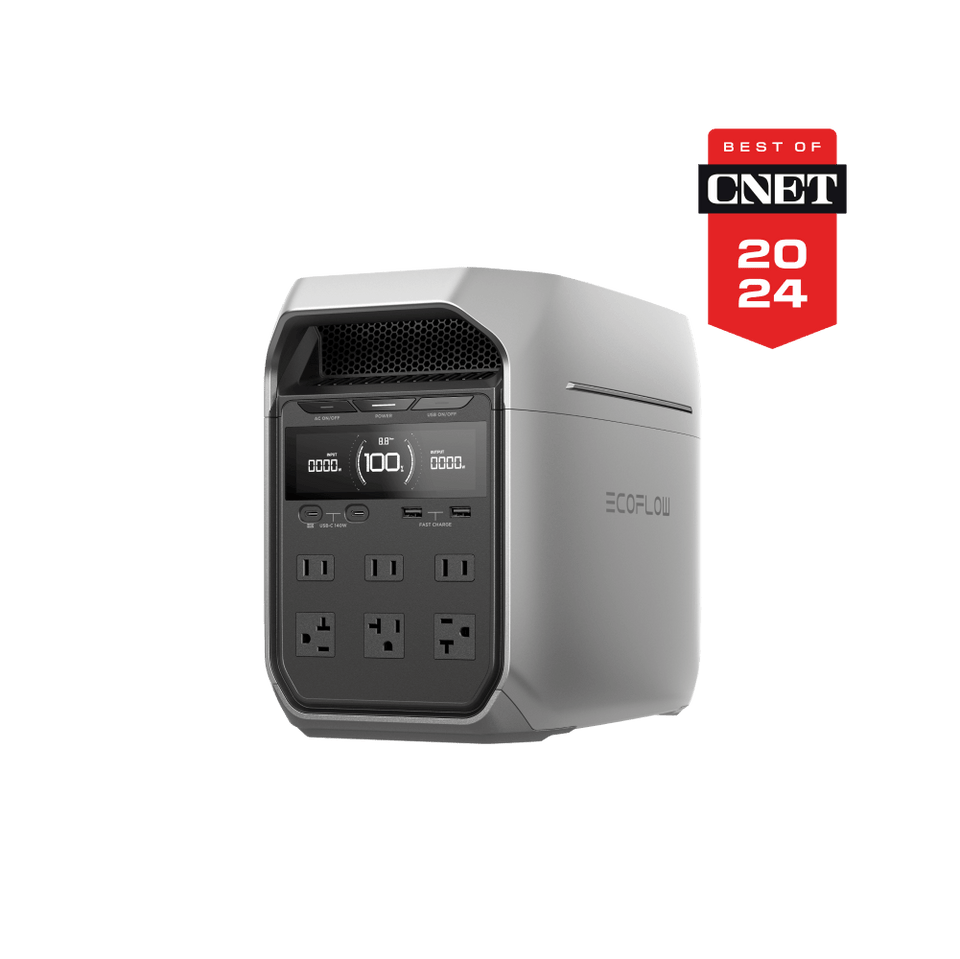
EcoFlow DELTA 3 Plus
Packs 1,000W dual-MPPT solar charging, sub-1-hour AC replenishment, and a sub-10 ms HID-capable UPS into a 27.6 lb chassis, making it more versatile than non-Plus 1kWh units.
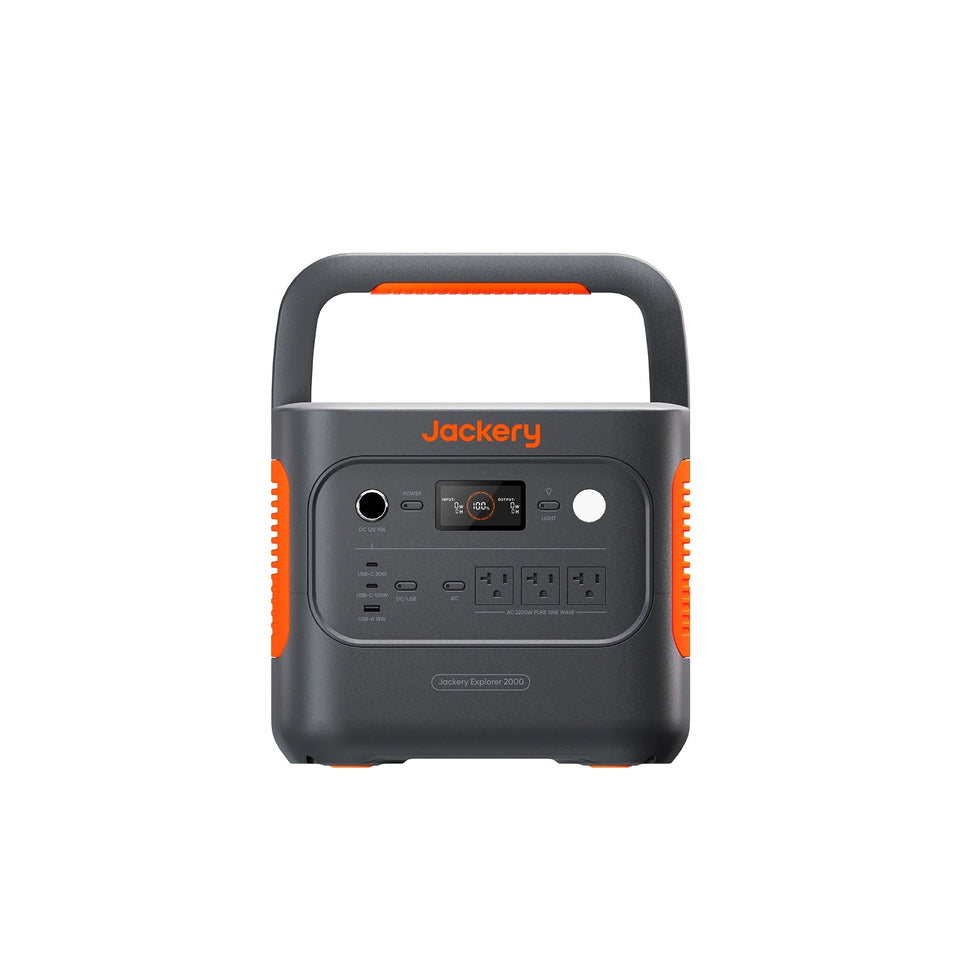
Jackery Explorer 2000 v2
A breakthrough 39.5 lb chassis makes 2,042Wh genuinely single-hand portable for camping and apartments, provided you accept its 400W solar recharge ceiling and non-expandable battery.
EcoFlow DELTA Pro Ultra
Built specifically for homeowners seeking high-voltage solar input (up to 5,600W) and modular 6kWh-per-stack scaling, though total kit cost and modular footprint exceed casual portable needs.
Jackery Explorer 5000 Plus
Combines a 5,040Wh LFP core, 7,200W split-phase output, 14,400W published surge headroom, and both High-PV (135–450V) and Low-PV solar inputs in a single wheeled chassis.
Frequently Asked Questions
Do current 2026 EcoFlow and Jackery power stations both use LiFePO4 batteries?+
Yes. Across current US production lines—including EcoFlow RIVER 2, DELTA 2, DELTA 3 Plus, and DELTA Pro Ultra, as well as Jackery Explorer 300 Plus, 1000 v2, 2000 v2, and 5000 Plus—both brands now standardize on LiFePO4 (LFP) cells. Only older discontinued or clearance NMC stock (such as legacy Explorer 240 v1, Explorer 500, or original DELTA 1300) still uses shorter-lived lithium-ion chemistries.
Why does Jackery specify 70% capacity retention at 4,000 cycles while EcoFlow specifies 80%?+
EcoFlow rates models like the DELTA 3 Plus for 4,000 cycles (and DELTA Pro Ultra for 3,500+ cycles) to 80% of original capacity under standard 25°C lab conditions. Jackery specifies 4,000 cycles to >=70% capacity on the Explorer 2000 v2 and Explorer 5000 Plus. Under occasional storm or weekend camping use, both exceed a decade of calendar life, though heavy daily solar cyclers should factor in the stricter 80% threshold.
Can third-party solar panels plug directly into EcoFlow and Jackery units?+
Most EcoFlow portable units accept standard XT60 or XT60i solar leads using widely available MC4-to-XT60 cables. Jackery portable models like the Explorer 1000 v2 and Explorer 2000 v2 use proprietary DC8020 ports, requiring DC8020-to-MC4 adapters for non-Jackery panels. Always confirm panel open-circuit voltage (Voc) stays below each station's manual ceiling—especially in cold winter sun.
Which brand gives better weight-per-Wh efficiency for carrying in a trunk or apartment?+
Jackery leads weight efficiency in the 1kWh–2kWh portable tiers thanks to Cell-to-Body (CTB) chassis packaging: the 1,070Wh Explorer 1000 v2 weighs roughly 23.8 lbs and the 2,042Wh Explorer 2000 v2 weighs just 39.5 lbs. However, at the 240V whole-home tier, EcoFlow's split DELTA Pro Ultra splits lifting load into a ~70 lb inverter and ~111.8 lb battery modules versus Jackery's single 134.5 lb Explorer 5000 Plus tower.
Sources & Technical References
- View Source →[1]Manufacturer SpecificationEcoFlow US OfficialVerified 2026-11-24EcoFlow DELTA 3 Plus Official Specifications
1,024Wh LFP, 1,800W continuous AC, 1,000W dual 500W MPPT solar, <10ms UPS, 1,500W X-Stream AC charging.
- View Source →[2]Manufacturer SpecificationEcoFlow US OfficialVerified 2026-11-24EcoFlow DELTA Pro Ultra Product Page & Specifications
Official North American 120V/240V split-phase inverter and 6,144Wh LiFePO4 battery module specs.
- View Source →[3]Manufacturer SpecificationJackery US OfficialVerified 2026-11-24Jackery Explorer 2000 v2 Product Page & User Guide
2,042Wh LFP Cell-to-Body design, 39.5 lbs weight, 2,200W continuous AC, 400W dual DC8020 solar input.
- View Source →[4]Manufacturer SpecificationJackery US OfficialVerified 2026-11-24Jackery Explorer 5000 Plus Official Product Specifications
5,040Wh LFP capacity, 7,200W/14,400W AC specs, High-PV (135-450V) and Low-PV (16-60V) limits, and warranty terms.
- View Source →[5]Third-Party Independent ReviewOutdoorGearLabVerified 2026-11-24Jackery Explorer 2000 v2 Independent Review & Benchmark Testing
Reports ~2.5 hour full AC recharge (~817 Wh/hr average), high portability score for 2kWh class, and solar expansion trade-offs.