EcoFlow vs. Jackery vs. Anker SOLIX vs. BLUETTI: 2026 Ecosystem Matrix
2026 ecosystem matrix comparing EcoFlow, Jackery, Anker SOLIX, and BLUETTI across whole-home 240V, 2kWh outage backup, and 1kWh camp tiers.
Comparing EcoFlow, Jackery, Anker SOLIX, and BLUETTI in 2026 comes down to ecosystem lock-in across three capacity tiers: 240V home backup (DELTA Pro Ultra 7,200W, Explorer 5000 Plus 14,400W surge, SOLIX F3800 6,000W), 2kWh outage stations (BLUETTI AC200L expandable to 8,192Wh vs. 39.5 lb Jackery 2000 v2), and 1kWh/compact travel kits (DELTA 3 Plus, AC70, SOLIX C300). Expect 78%–88% AC usable output and 5-year US warranties across all four brands.

Buying a portable power station in 2026 is no longer a simple wattage-for-dollar comparison between isolated boxes. Because EcoFlow, Jackery, Anker SOLIX, and BLUETTI have each pivoted from standalone camping batteries into closed residential backup and RV ecosystems, choosing a brand means committing to a specific expansion battery bus, transfer switch hardware, and solar connector standard for the next five to ten years.
Legacy roundups that pitted discontinued NMC stations like the Jackery 500 or EcoFlow DELTA Mini against current hardware miss how decisively the market shifted toward LiFePO4 (LFP) chemistry and split-phase 240V output. Below is a current 2026 architecture matrix comparing all four brands across the exact three deployment tiers buyers actually shop.
The 4-Brand Ecosystem Architecture Matrix (2026)
Instead of treating a 300W travel brick and a 7,200W home backup stack as direct rivals, compare each brand’s flagship 240V, 2kWh outage, and compact travel offerings side by side.
| Ecosystem Pillar | EcoFlow | Jackery | Anker SOLIX | BLUETTI |
|---|---|---|---|---|
| Whole-Home 240V Flagship | DELTA Pro Ultra (6,144Wh, 7,200W, up to 90kWh) | Explorer 5000 Plus (5,040Wh, 7,200W / 14,400W surge, up to 60.48kWh) | SOLIX F3800 (3,840Wh, 6,000W, up to 53.76kWh) | AC300 + B300K (modular 3kW/6kW split-phase ecosystem) |
| 2kWh Blackout & RV Core | DELTA 2 Max (2,048Wh, 2,400W) | Explorer 2000 v2 (2,042Wh, 2,200W, 39.5 lbs, non-expandable) | SOLIX F2000 (2,048Wh, 2,400W, TT-30R) | AC200L (2,048Wh, 2,400W, TT-30R + 48V DC, up to 8,192Wh) |
| Compact / 1kWh Travel Tier | DELTA 3 Plus (1,024Wh, 1,800W, 1,000W solar, <10ms UPS) | Explorer 1000 v2 / 300 Plus | SOLIX C300 AC (288Wh, 300W, 9.1 lbs, dual 140W USB-C) | AC70 (768Wh, 1,000W, 500W solar, 22.5 lbs) |
| Home Transfer Lock-In | Smart Home Panel 2 | Jackery Smart Transfer Switch | Anker Home Power Panel | BLUETTI Smart Home / Subpanel kits |
| Standard US Warranty | 5 Years | 5 Years (3-yr standard + 2-yr registration) | 5 Years | 5 Years |
| Core Chemistry & Cycles | LiFePO4 (3,500–4,000 cycles to 80%) | LiFePO4 (4,000 cycles to >=70%) | LiFePO4 (3,000+ cycles to 80%) | LiFePO4 (3,000+ cycles to 80%) |
Tier 1: Whole-Home 240V Split-Phase Systems
If your outage plan includes a 240V deep well pump, electric water heater, or multi-circuit breaker subpanel, you must skip 120V midsize units entirely and choose a native split-phase 120V/240V platform. Across the big four, engineering priorities diverge sharply:
- EcoFlow DELTA Pro Ultra (Best Modular Stack & High-PV Solar): EcoFlow splits the 7,200W inverter (70 lbs) from the 6,144Wh LFP battery modules (111.8 lbs each), making stairs and tight utility closets far easier than single 135-pound chassis designs. Its 5,600W dual-MPPT solar ceiling (80–450V High-PV + 30–150V Low-PV) integrates directly with rigid rooftop arrays, while batteries scale up to 90kWh across three parallel inverters paired with Smart Home Panel 2.
- Jackery Explorer 5000 Plus (Highest Surge Spec in One Tower): Packing 5,040Wh, 7,200W continuous output, and a massive 14,400W published surge rating into a 134.5 lb wheeled unit (~$2,999 street), Jackery emphasizes motor-starting headroom and dual High-PV (135–450V, 4,000W) plus Low-PV (16–60V) inputs alongside its Smart Transfer Switch.
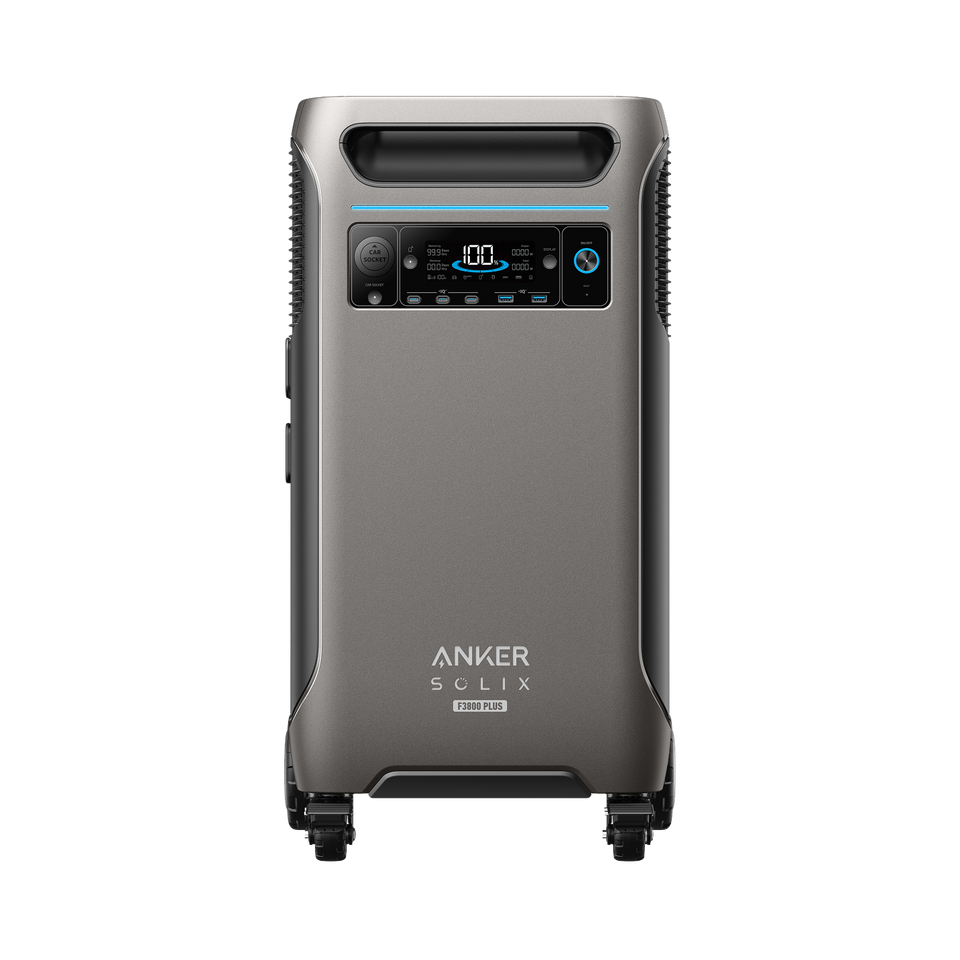
- Anker SOLIX F3800 (Best Plug-and-Play 240V Port Panel): Anker built both a 240V NEMA 14-50R and NEMA L14-30R twist-lock straight onto a single 132.3 lb wheeled suitcase (3,840Wh, 6,000W continuous / 9,000W surge). Buyers comparing SKUs must verify whether they are purchasing the original F3800 (capped at 11–60V / 2,400W solar) or the newer F3800 Plus revision (expanded to 11–165V / 3,200W solar).
- BLUETTI Modular Ecosystem: BLUETTI separates its zero-battery AC300 head unit from external B300K (2,764.8Wh) stacks—requiring two linked head units for 240V split-phase, though offering straightforward single-component lifting.
Remember that any circuit-level tie-in to your home breaker panel falls under NFPA 70 (National Electrical Code) transfer-equipment rules and requires a licensed electrician—never DIY panel backfeeding. Review our 120V vs. 240V home backup guide and EcoFlow vs. Anker SOLIX comparison for circuit planning.
Tier 2: 2kWh Blackout Fridge & RV Workhorses
For most American households who only need to keep a kitchen refrigerator, chest freezer, Wi-Fi modem, CPAP, and microwave running on 120V extension cords, the 2,048Wh class hits the practical sweet spot. Here, BLUETTI and Jackery showcase opposite design philosophies:
- BLUETTI AC200L (2,048Wh | 2,400W AC | 62.4 lbs): Built as an expandable RV and emergency hub, the BLUETTI AC200L includes a 30A TT-30R RV port, a 48V/8A DC RV bus, 1,200W high-voltage solar input (12–145V Voc), and expansion support up to 8,192Wh. In standardized testing by CNET Labs, it led 2kWh units with 77.76% round-trip efficiency and over 29 hours of continuous refrigerator runtime. Its compromise is weight: 62.4 lbs with zero wheels.
- Jackery Explorer 2000 v2 (2,042Wh | 2,200W AC | 39.5 lbs): Using Cell-to-Body structural packaging, the Jackery Explorer 2000 v2 trims weight nearly 23 pounds below the AC200L, earning praise from OutdoorGearLab and TechRadar for single-person trunk loading and ~30 dB quiet charging. The trade-offs? Zero battery expansion ports and a modest 400W solar cap (16–60V dual DC8020).
At typical 78%–88% AC conversion efficiency, both 2kWh units deliver roughly 1,600Wh to 1,800Wh of usable AC power per full charge—enough for 16 to 28+ hours on a modern cyclic fridge depending on ambient room heat and inverter idle draw.
Tier 3: 1kWh & Sub-1kWh Camp, Office & Ultralight Kits
Down in the under-30-pound portable bracket, EcoFlow, BLUETTI, and Anker split into three distinct niches:
- EcoFlow DELTA 3 Plus (1,024Wh | 1,800W AC | 27.6 lbs): Currently the benchmark 1kWh all-rounder thanks to dual 500W MPPT solar channels (1,000W total), 56-minute 1,500W AC recharging, dual 140W USB-C PD 3.1 ports, and a sub-10ms UPS with USB HID signaling for desktop workstations and NAS servers.
- BLUETTI AC70 (768Wh | 1,000W AC | 22.5 lbs): Punches above its price (~$429 street) with a 500W solar input and verified independent efficiency tests—PowerOffGrid measured 705 Wh usable AC output at 250W load, and APH Networks logged 730.59 Wh at 136W load (~92.5% net inverter efficiency). Its compromises are Bluetooth-only app telemetry and two AC sockets.
- Anker SOLIX C300 AC (288Wh | 300W AC | 9.1 lbs): A vertical grab-and-go battery (~$229 street) packing dual 140W bidirectional USB-C ports and <10ms UPS protection for routers and laptops. Just verify you order the AC-equipped Model A1722 rather than the AC-less C300 DC variant.
Warranty, Expansion Lock-In & Buying Rules
Before clicking checkout, avoid the three most common ecosystem traps:
- Cross-Generation Battery Compatibility: Even within a single brand, older expansion batteries don’t always link to current head units. Check exact supported battery SKUs—for example, DELTA 3 Plus accepts DELTA 3, DELTA 2 Max, and DELTA Pro 3 Extra Batteries, whereas Jackery Explorer 2000 v2 accepts none.
- Firmware & App Control: EcoFlow and Anker SOLIX currently lead in Wi-Fi Storm Guard automation and remote telemetry, while value-oriented models like BLUETTI AC70 omit Wi-Fi entirely for local Bluetooth control.
- Always Size From Loads First: Whether you lean toward EcoFlow vs. Jackery, EcoFlow vs. BLUETTI, or Jackery vs. BLUETTI, calculate your daily watt-hours before picking an ecosystem. Start with our how to choose a portable power station guide or filter all 12 verified models inside our power station finder tool.
Models Discussed in This Article
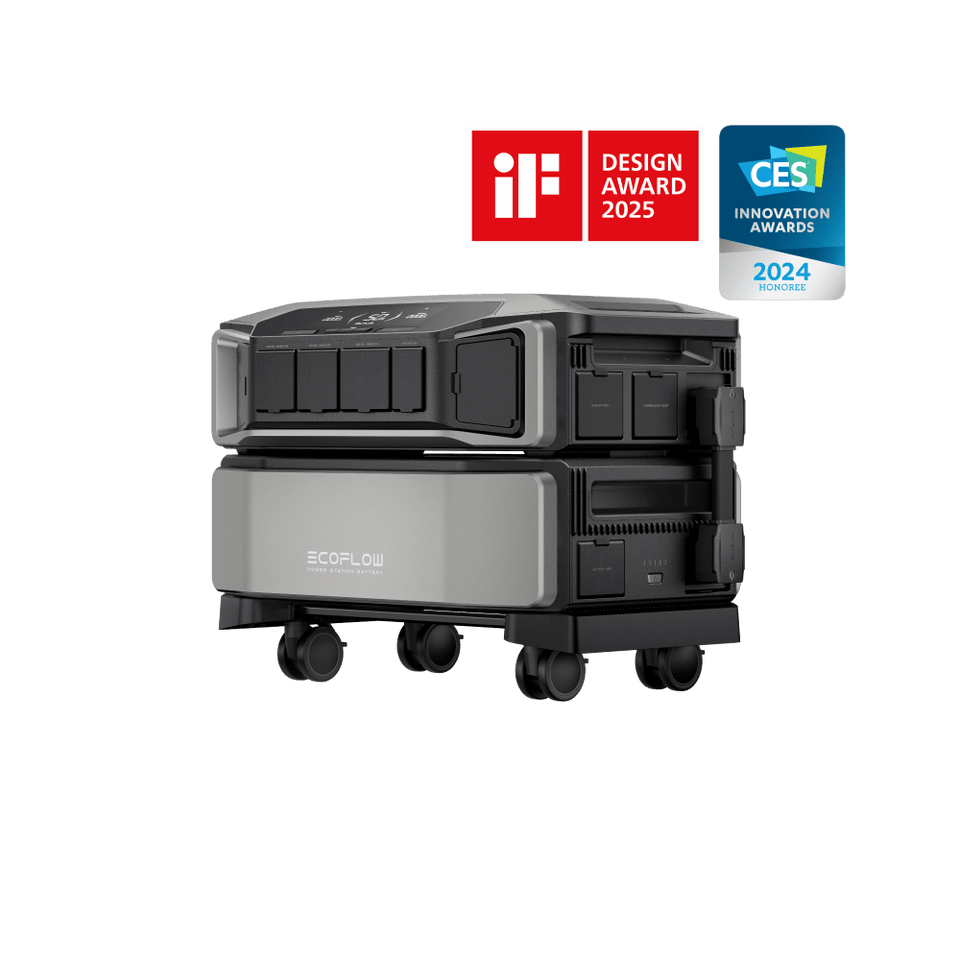
EcoFlow DELTA Pro Ultra
Built specifically for homeowners seeking high-voltage solar input (up to 5,600W) and modular 6kWh-per-stack scaling, though total kit cost and modular footprint exceed casual portable needs.
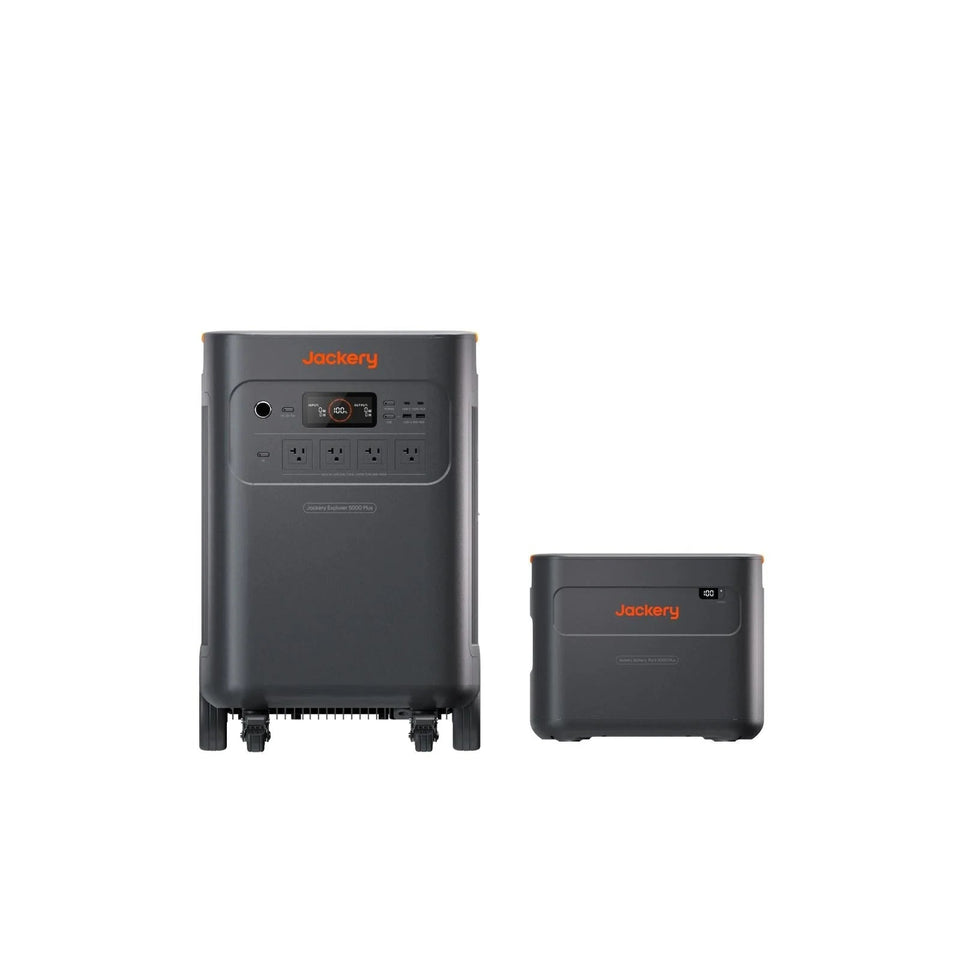
Jackery Explorer 5000 Plus
Combines a 5,040Wh LFP core, 7,200W split-phase output, 14,400W published surge headroom, and both High-PV (135–450V) and Low-PV solar inputs in a single wheeled chassis.
Anker SOLIX F3800
One of the most approachable plug-and-play 120V/240V wheeled units thanks to built-in NEMA 14-50R and L14-30R ports, though high idle overhead on light loads and the 60V solar cap (on the original non-Plus SKU) require careful sizing.
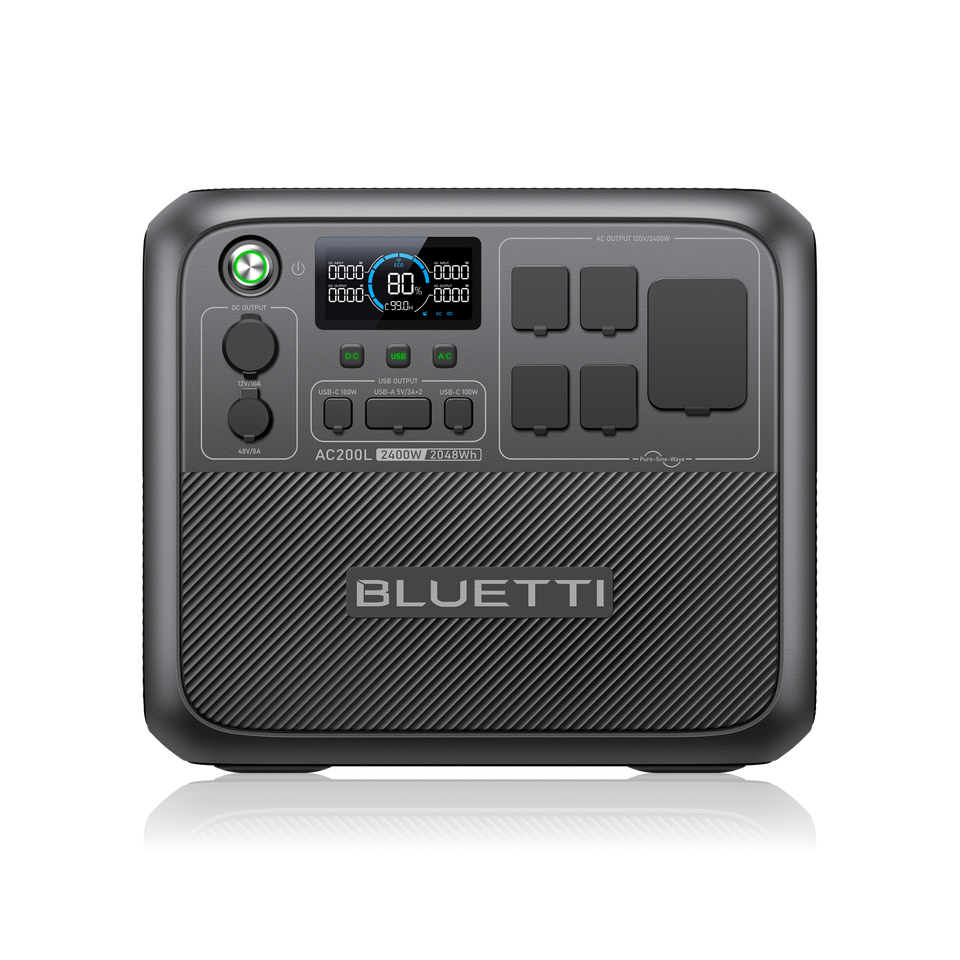
BLUETTI AC200L
Combines a high-efficiency 2,048Wh expandable platform, 1,200W high-voltage solar input (12–145V), and dedicated 30A TT-30R + 48V DC RV outputs at strong street pricing, trading away light weight and built-in wheels.
Frequently Asked Questions
Can expansion batteries or smart home panels be mixed across EcoFlow, Jackery, Anker, and BLUETTI?+
No. Every major brand relies on proprietary expansion cables, BMS handshakes, and transfer-switch communication protocols. Once you buy a Smart Home Panel 2, Smart Transfer Switch, Home Power Panel, or expansion battery, you are effectively locked into that brand's hardware generation.
Which of the four brands offers the lightest 2,000Wh power station for apartments or camping?+
Jackery leads on weight in the 2kWh class with the 39.5 lb Explorer 2000 v2 (2,042Wh), which achieves its compact footprint by omitting external expansion ports. By comparison, the expandable BLUETTI AC200L weighs 62.4 lbs.
How do US warranties compare across EcoFlow, Jackery, Anker SOLIX, and BLUETTI?+
All four brands now back their flagship and current-generation LiFePO4 stations with 5-year US warranty coverage, though Jackery splits coverage on models like the Explorer 2000 v2 and 5000 Plus into a 3-year standard term plus a 2-year extension upon registration.
Do all four brands use LiFePO4 batteries in their current 2026 lineups?+
Yes. Older legacy models like the original Jackery Explorer 500 or Explorer 1500 used NMC lithium-ion chemistry, but all current flagship and midsize tiers—including DELTA Pro Ultra, DELTA 3 Plus, Explorer 5000 Plus, Explorer 2000 v2, SOLIX F3800/C300, and BLUETTI AC200L/AC70—run LiFePO4 (LFP) cells rated for 3,000 to 4,000+ cycles.
Sources & Technical References
- View Source →[1]Manufacturer SpecificationEcoFlow US OfficialVerified 2026-11-24EcoFlow DELTA Pro Ultra Product Page & Specifications
Official North American 120V/240V split-phase inverter and 6,144Wh LiFePO4 battery module specs.
- View Source →[2]Manufacturer SpecificationEcoFlow US OfficialVerified 2026-11-24EcoFlow DELTA 3 Plus Official Specifications
1,024Wh LFP, 1,800W continuous AC, 1,000W dual 500W MPPT solar, <10ms UPS, 1,500W X-Stream AC charging.
- View Source →[3]Manufacturer SpecificationJackery US OfficialVerified 2026-11-24Jackery Explorer 5000 Plus Official Product Specifications
5,040Wh LFP capacity, 7,200W/14,400W AC specs, High-PV (135-450V) and Low-PV (16-60V) limits, and warranty terms.
- View Source →[4]Manufacturer SpecificationAnker SOLIX US OfficialVerified 2026-11-24Anker SOLIX F3800 Portable Power Station Official Specifications
North American model specs including NEMA 14-50R, L14-30R, 6,000W output, 3,840Wh capacity, and 11-60V dual solar input.
- View Source →[5]Manufacturer SpecificationBLUETTI US OfficialVerified 2026-11-24BLUETTI AC200L Portable Power Station Official Specifications
2,048Wh LFP, 2,400W continuous AC, 3,600W Power Lifting mode, NEMA TT-30R + 48V/8A DC RV port, 1,200W solar (12-145V).